Bacchus and Ariadne
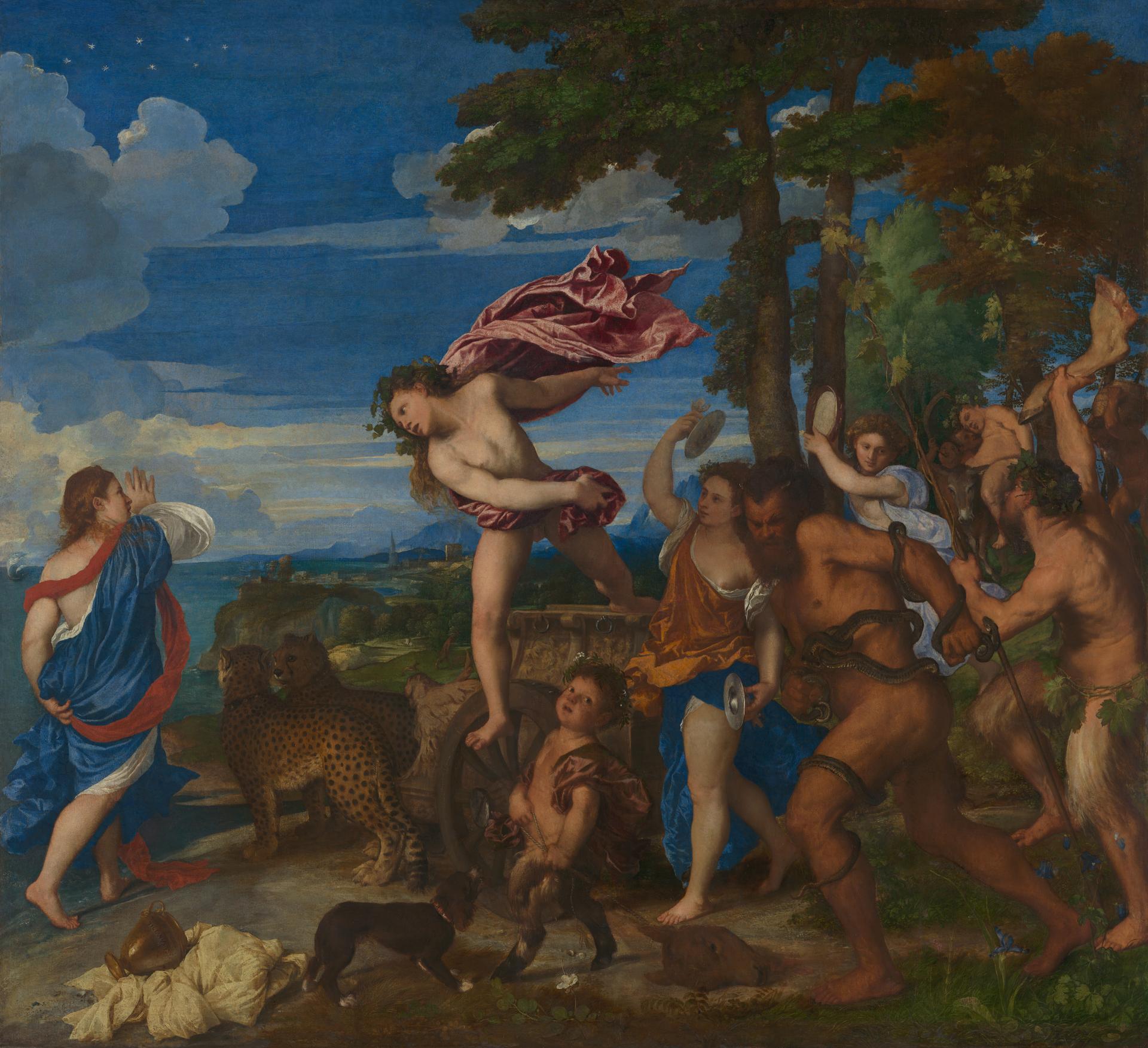
- Artist: Titian
- Date: 1520-3
- Medium: oil on canvas
- Museum: The National Gallery
- Collection record: The National Gallery website
Listen to the free audio guide
About this artwork
This is the "Bacchus and Ariadne" by Titian. Painted in the Italian north, it's a beautiful example of Renaissance art. The painting tells the story of Bacchus, god of wine, falling in love with Ariadne, who has been abandoned on the Greek island of Naxos by Theseus.
You can see Ariadne standing alone, looking a bit afraid of Bacchus' approach. But as we know from classical authors Ovid and Catullus, Bacchus promises her the stars - in this painting, you can see the stars above her head. This is actually based on one version of the story where he throws her wedding crown into the air to immortalise her as the constellation Corona Borealis.
What's really striking about this painting is the vibrant colours Titian has used. He combined all the purest and most vibrant pigments available at that time, creating a rich, jewel-like quality. You can see the ultramarine blue in the sky, which is one of the most intense colours he used, alongside azurite for the landscape.
The different flesh tones are picked up across the picture, providing a unifying link. And if you look closely, you'll notice the textural qualities of the paint itself adding interest and variety to the areas of pure colour. This painting had an important influence on European art, helping to popularise the subject of the loves of the gods in gallery pictures.
Titian's skill as a colourist is on full display here, making this one of his finest works.
See it in person
Bacchus and Ariadne hangs in The National Gallery on Trafalgar Square, London — free to enter. Point your phone at any artwork there and audioguide.london plays a free audio guide in six languages — no app download needed.