Cupboard
- Gallery: Europe 1600-1815, Room 7, The Sheikha Amna Bint Mohammed Al Thani Gallery
- Made in: Netherlands
- Date: 1620-1640
- Object type: Cupboard
- Materials: Oak, carved, with ebony inlay, on turned ebonised front feet
- Dimensions: Height (overall) 1875 mm; Width (base) 1260 mm; Depth (base) 560 mm
- Museum: V&A South Kensington
- Collection record: V&A website
- Image © Victoria and Albert Museum, London.
Listen to the free audio guide
In the museum now? Point your phone at the next object and hear its guide.
About this object
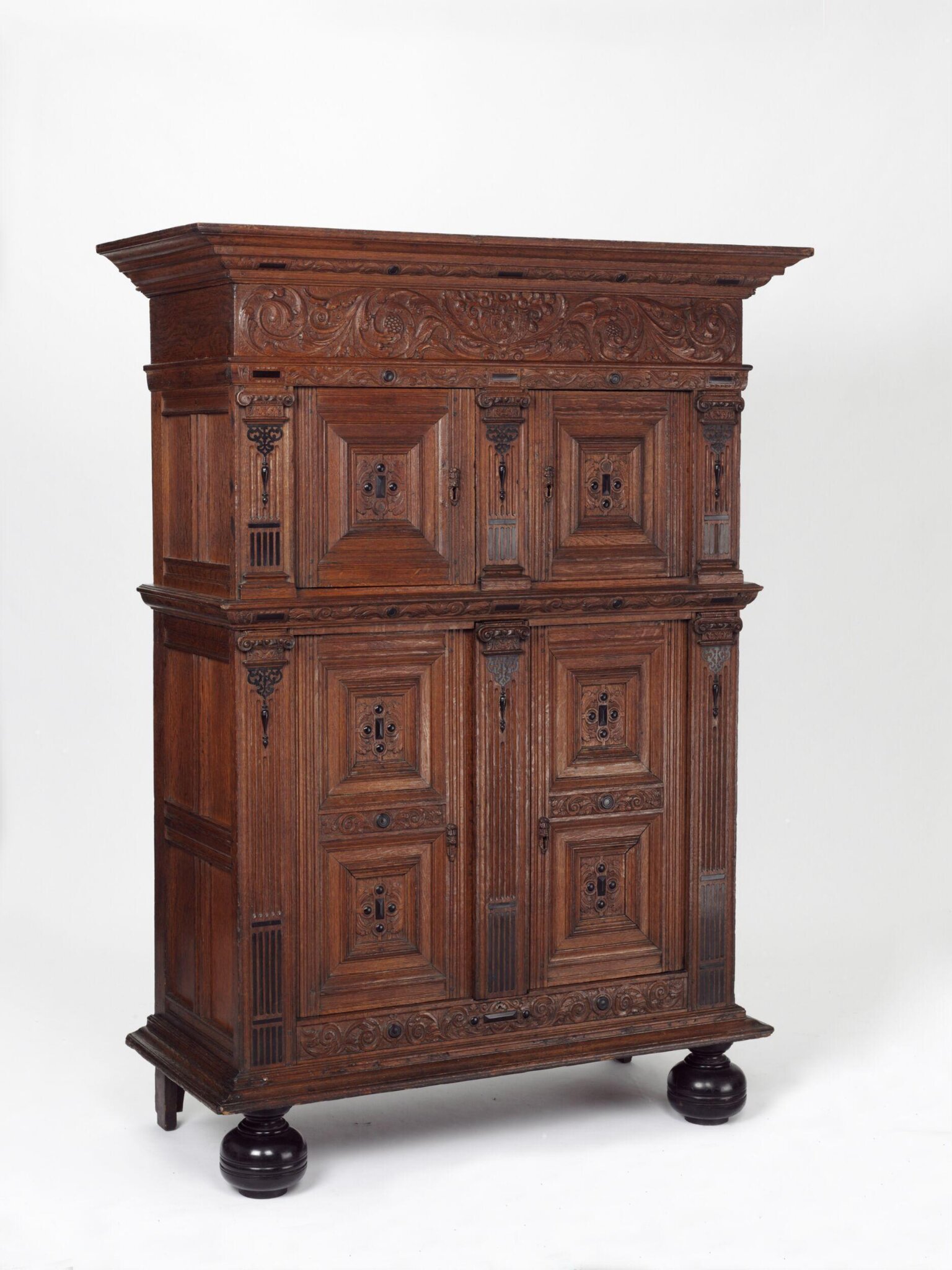
Before you is a striking two-stage cupboard made of carved oak, dating from the first half of the seventeenth century. This piece is a classic example of a Dutch kast, a type of large furniture that became a traditional staple in many households during this period.
As you look closely, notice the beautiful contrast between the pale oak and the dark, decorative ebony. This ebony is used for delicate inlay, split balusters, and the turned feet at the base. The design is highly architectural, featuring carved pilasters and panels decorated with leafy strapwork.
In a Dutch home, a cupboard like this would have been a central, imposing piece of furniture, often placed in the front room to display the family's status. It was used to store precious household items, such as linen and clothing, which were often part of a wedding dowry. While the upper compartments held smaller items like napkins, the larger lower section was used for heavier linens like bedsheets.
See it in person
Cupboard is on display in Europe 1600-1815, Room 7, The Sheikha Amna Bint Mohammed Al Thani Gallery at the V&A South Kensington on Cromwell Road, London — free to enter. Choose V&A South Kensington on audioguide.london and take a photo of it to hear this free audio guide in six languages — no app download needed.
New, in beta. V&A support has just launched and is still improving: 1,000 objects with audio so far, with more added all the time.