Eleanor of Aquitaine
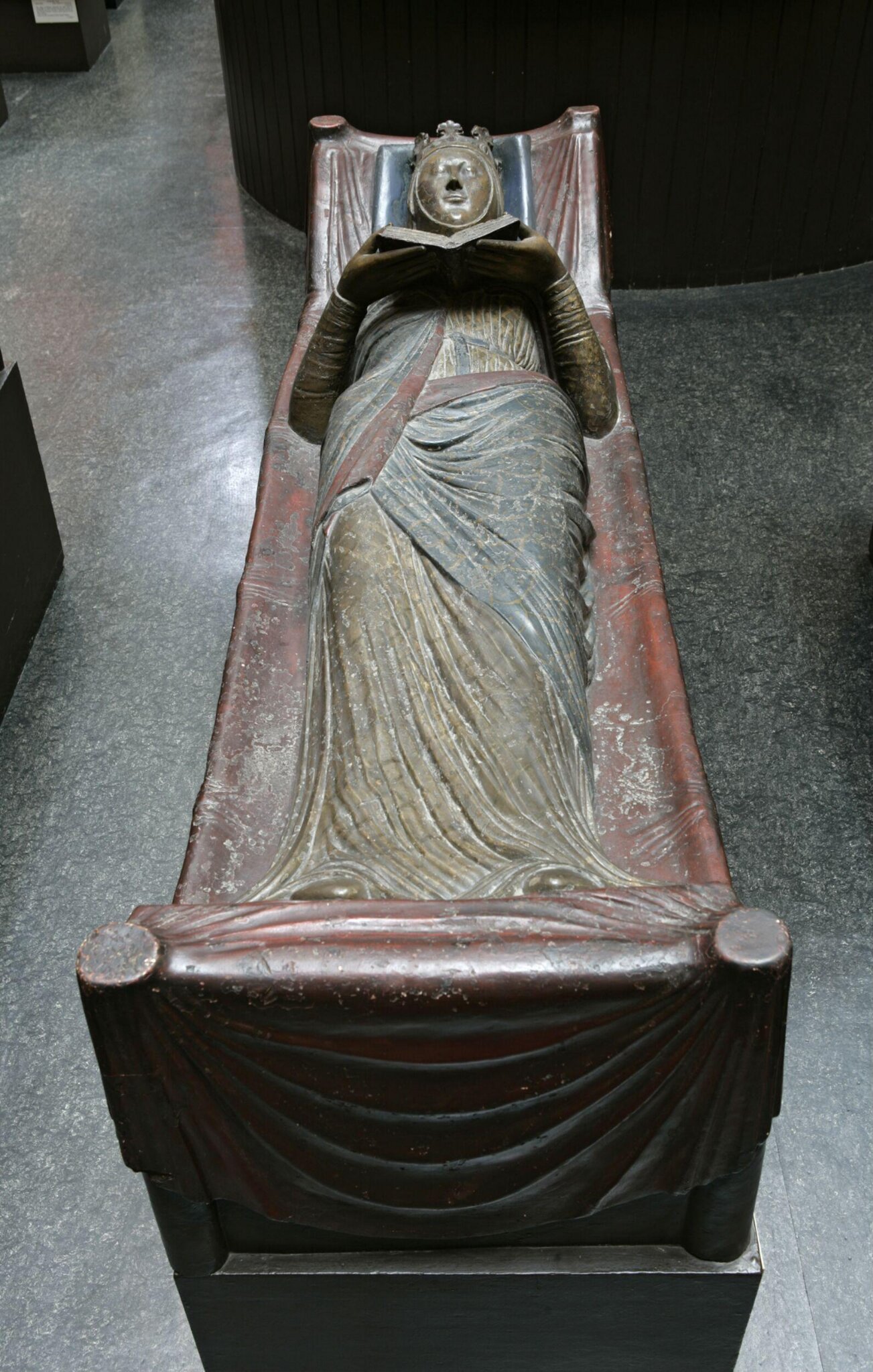
- Gallery: Cast Courts, The Ruddock Family Cast Court, Room 46A
- Made in: France
- Date: 1852-1854
- Object type: Effigy
- Materials: Painted plaster cast
- Dimensions: Length 235.3 cm; Weight 301 kg; Height 69.4 cm
- Museum: V&A South Kensington
- Collection record: V&A website
- Image © Victoria and Albert Museum, London.
Listen to the free audio guide
In the museum now? Point your phone at the next object and hear its guide.
About this object
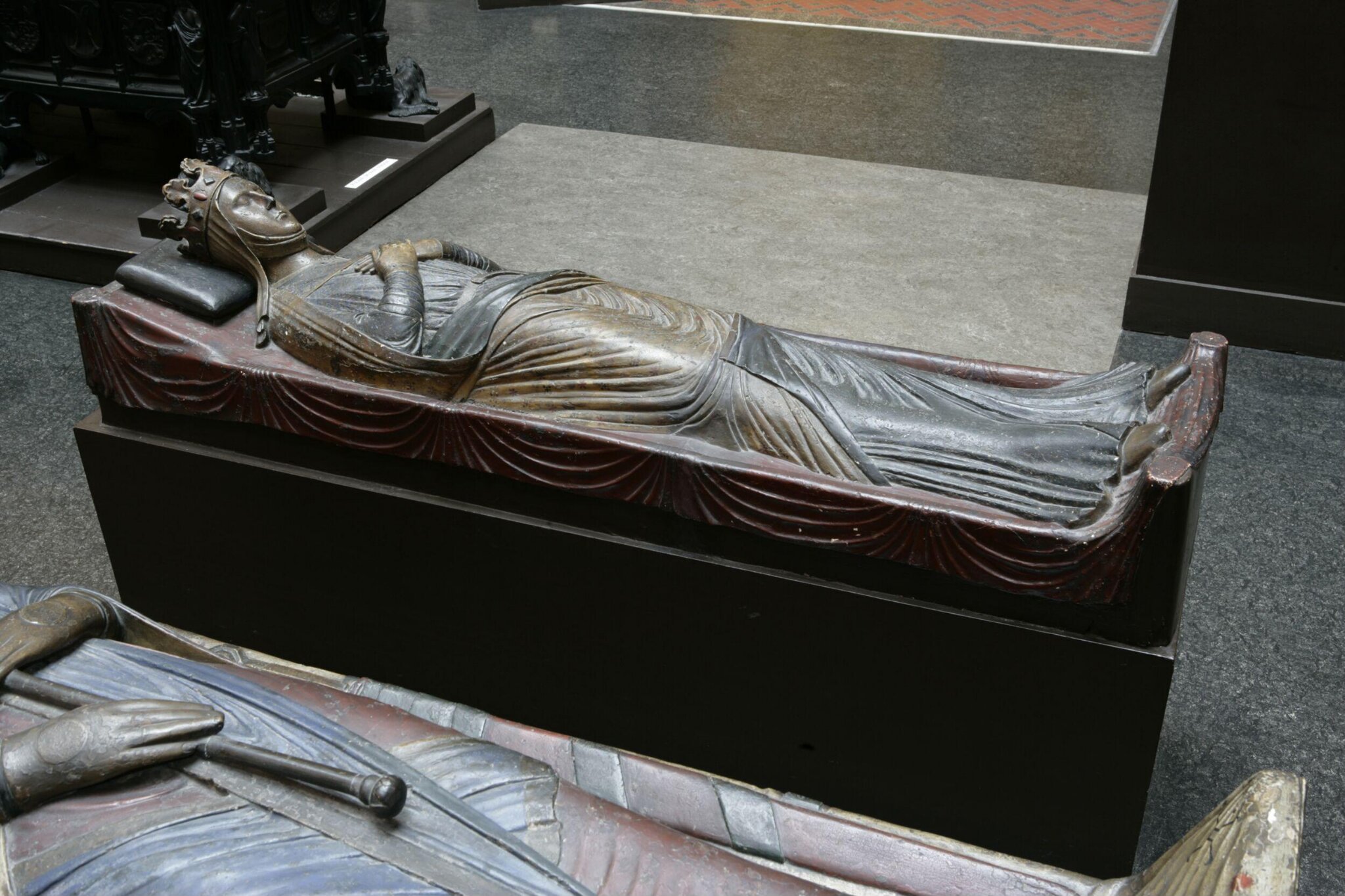
Before you is the "Eleanor of Aquitaine" effigy, a painted plaster cast created in London between 1852 and 1854. This cast is designed to mimic the pigmentation of the original stone monument.
The original work was made in France around 1204 to 1210. It depicts Eleanor, who was the Queen to King Henry the Second of England. She spent her final years at Fontevrault Abbey, where she was eventually buried alongside her husband. This effigy is one of several representing the kings and queens of the Plantagenet dynasty located at the abbey.
To create this piece, a mould was likely made from the original sculpture in France and then transported to Britain. This cast captures the intricate details of the original, serving as a detailed record of the monument. It stands as a striking tribute to a powerful historical figure, preserving her likeness through the medium of painted plaster.
See it in person
Eleanor of Aquitaine is on display in Cast Courts, The Ruddock Family Cast Court, Room 46A at the V&A South Kensington on Cromwell Road, London — free to enter. Choose V&A South Kensington on audioguide.london and take a photo of it to hear this free audio guide in six languages — no app download needed.
New, in beta. V&A support has just launched and is still improving: 1,000 objects with audio so far, with more added all the time.