Falconry
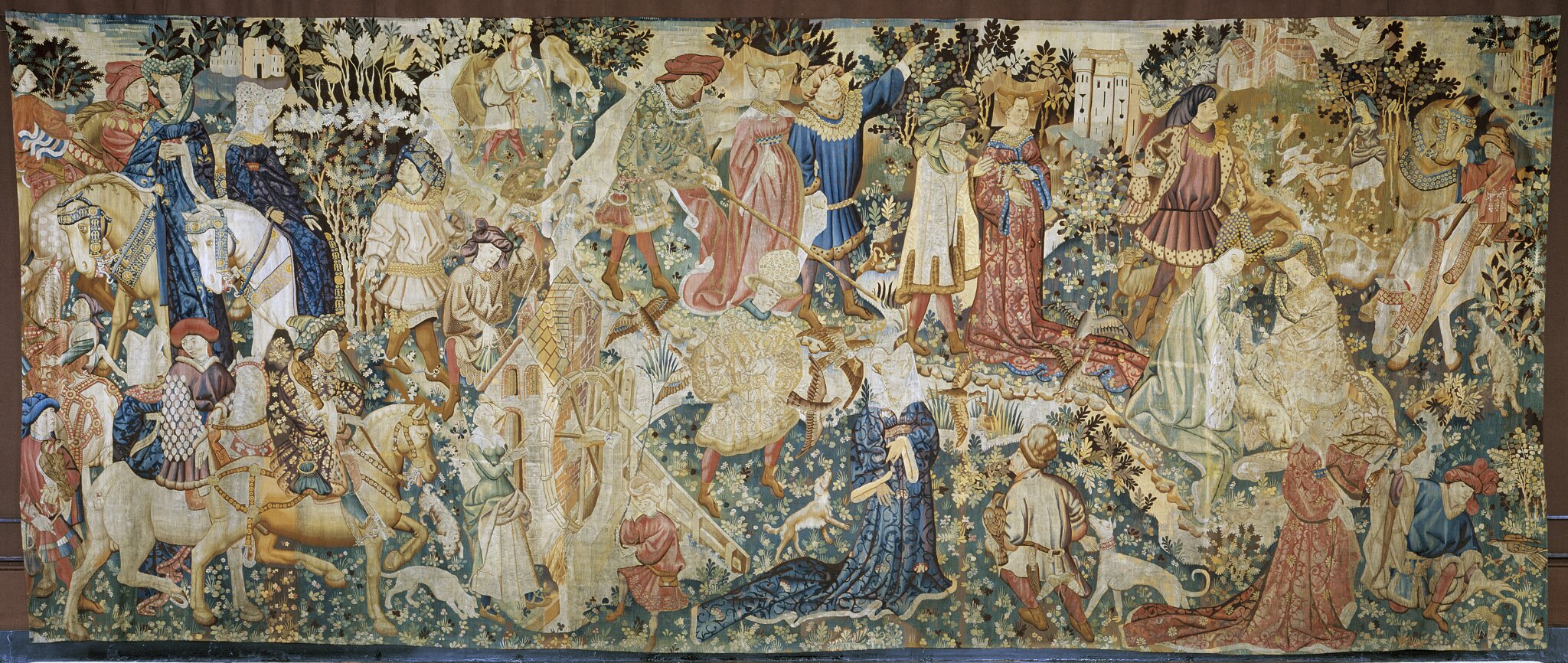
- Gallery: Tapestries, Room 94
- Made in: Arras; Low Countries
- Date: 1430s
- Object type: Tapestry
- Materials: Tapestry-woven
- Dimensions: Height 445 cm; Width 1075.9 cm
- Museum: V&A South Kensington
- Collection record: V&A website
- Image © Victoria and Albert Museum, London.
Listen to the free audio guide
In the museum now? Point your phone at the next object and hear its guide.
About this object
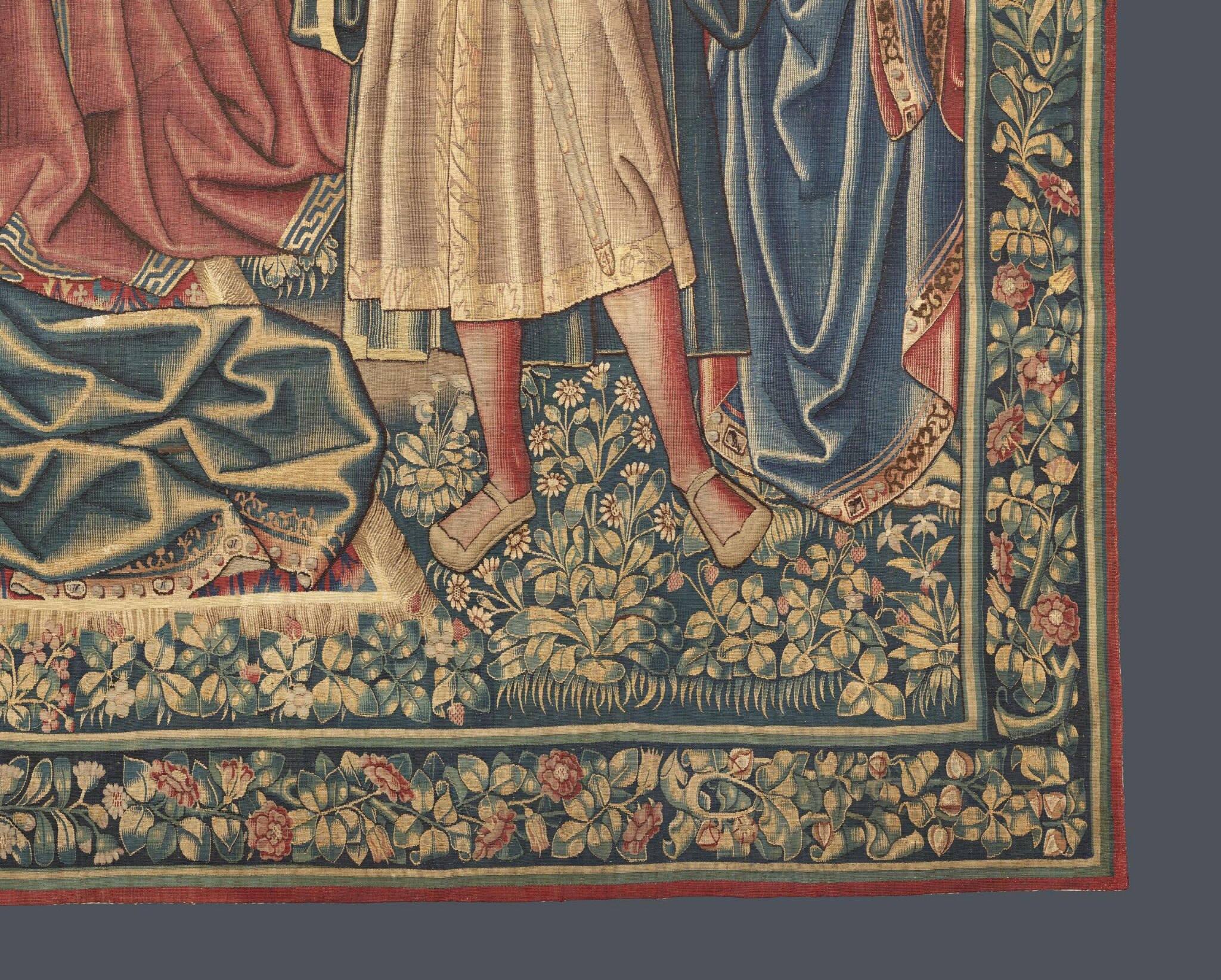
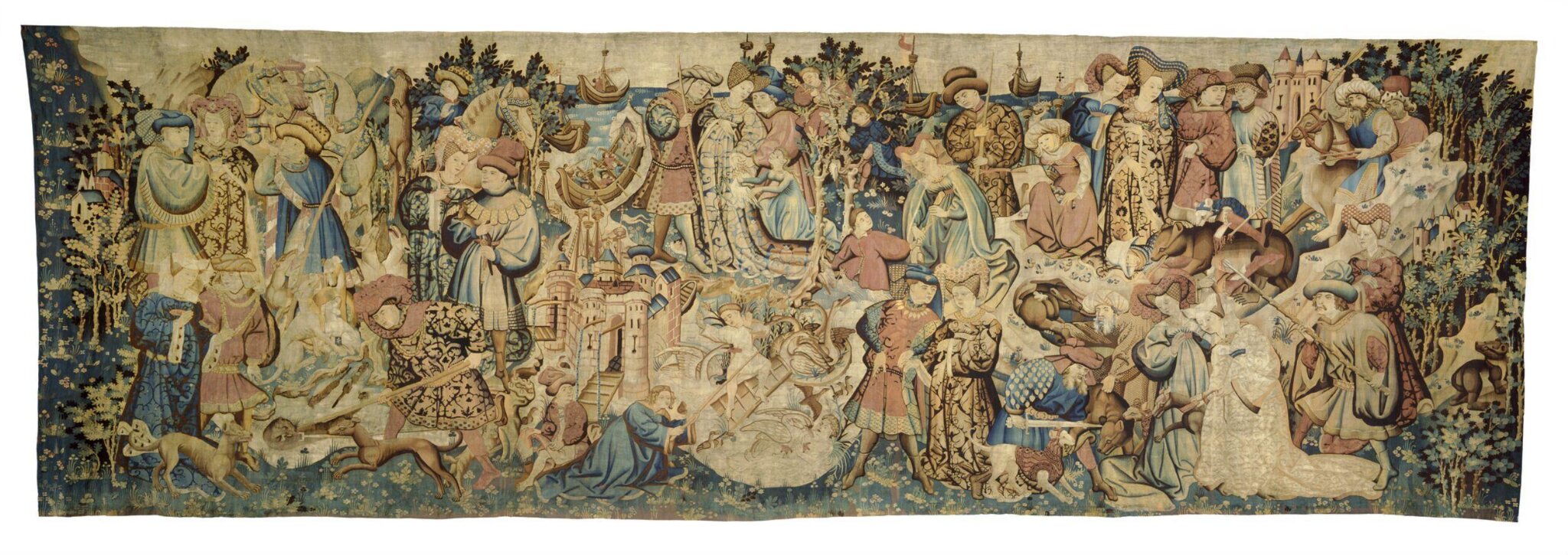
Before you is "Falconry", a remarkable tapestry woven in the 1430s. This work comes from the Low Countries, likely from a workshop in the southern Netherlands. In the 15th century, tapestries like this were essential for providing color, warmth, and even draught-proofing to stone rooms.
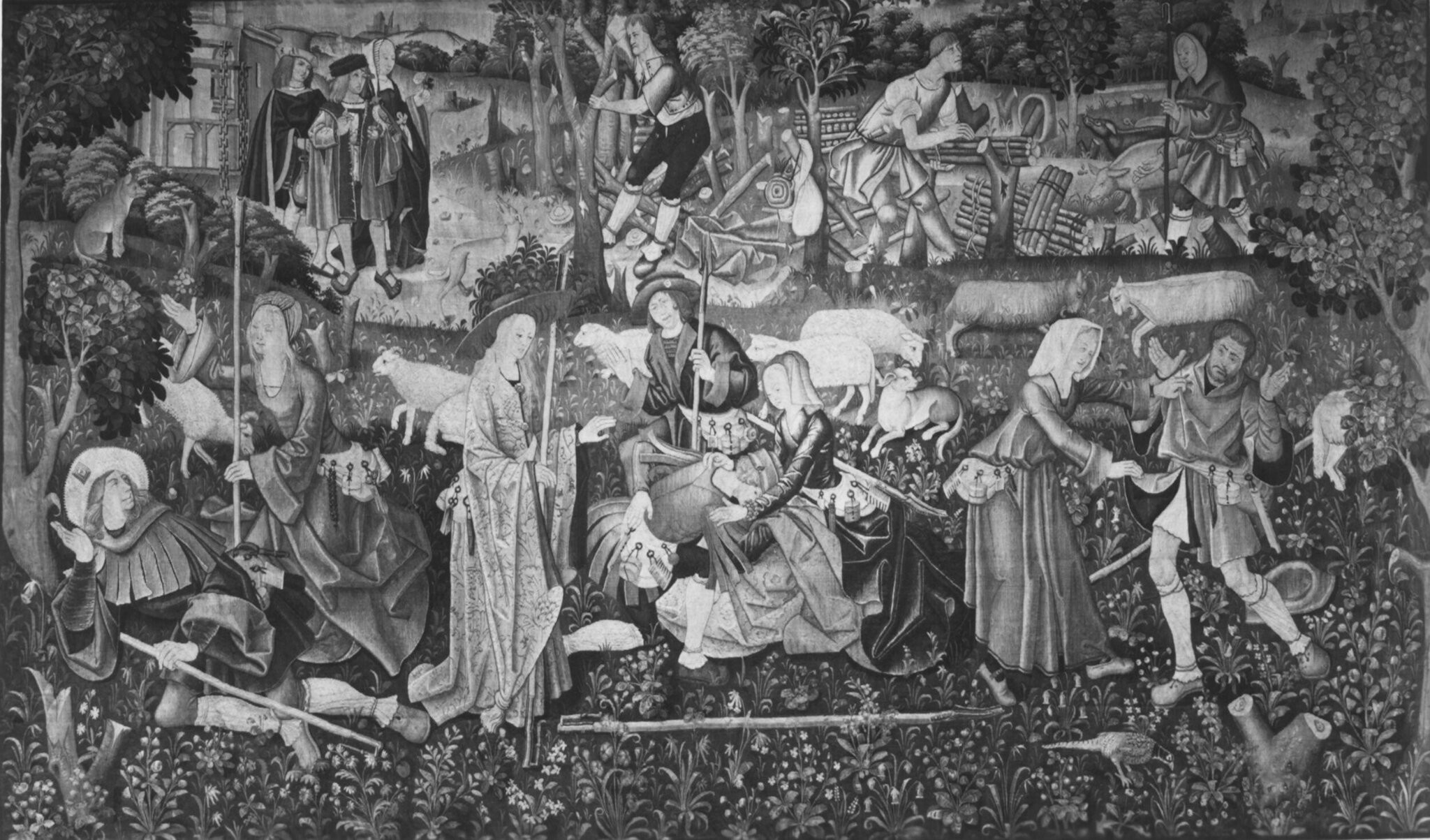
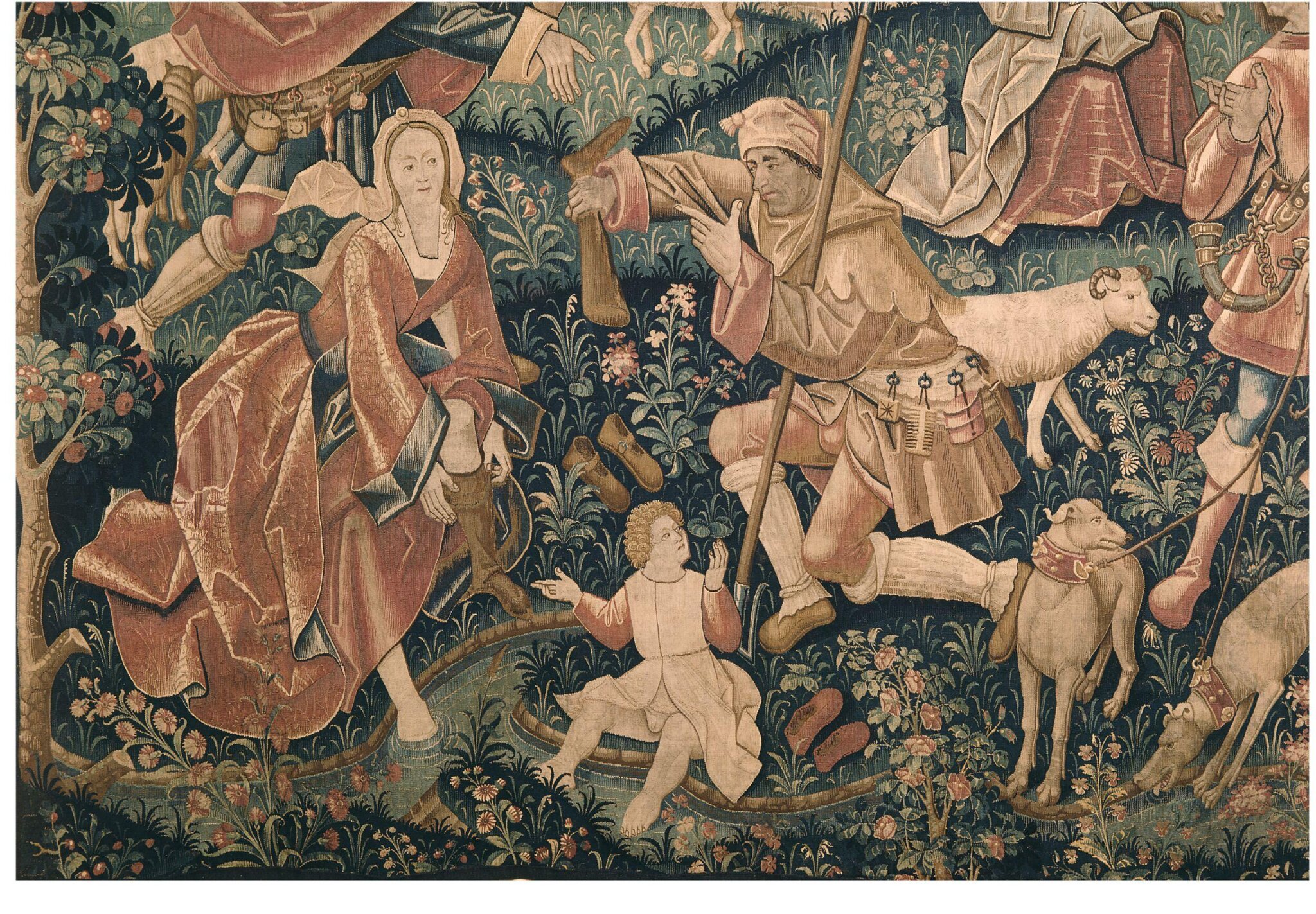
As you look closely at the composition, you will see various scenes of the hunt interspersed with glimpses of rural life. The design is made up of numerous smaller scenes that can each make sense on their own. This was a practical technique used so that if a tapestry was ever cut or altered to fit a specific space, the narrative would remain intact.
If you examine the horse-trappings, you might notice the letter M decorating three of them. While this could be an initial, it may also be a reference to the Virgin Mary. This piece is part of a celebrated group of four hunting tapestries that once belonged to the Dukes of Devonshire.
See it in person
Falconry is on display in Tapestries, Room 94 at the V&A South Kensington on Cromwell Road, London — free to enter. Choose V&A South Kensington on audioguide.london and take a photo of it to hear this free audio guide in six languages — no app download needed.
New, in beta. V&A support has just launched and is still improving: 1,000 objects with audio so far, with more added all the time.