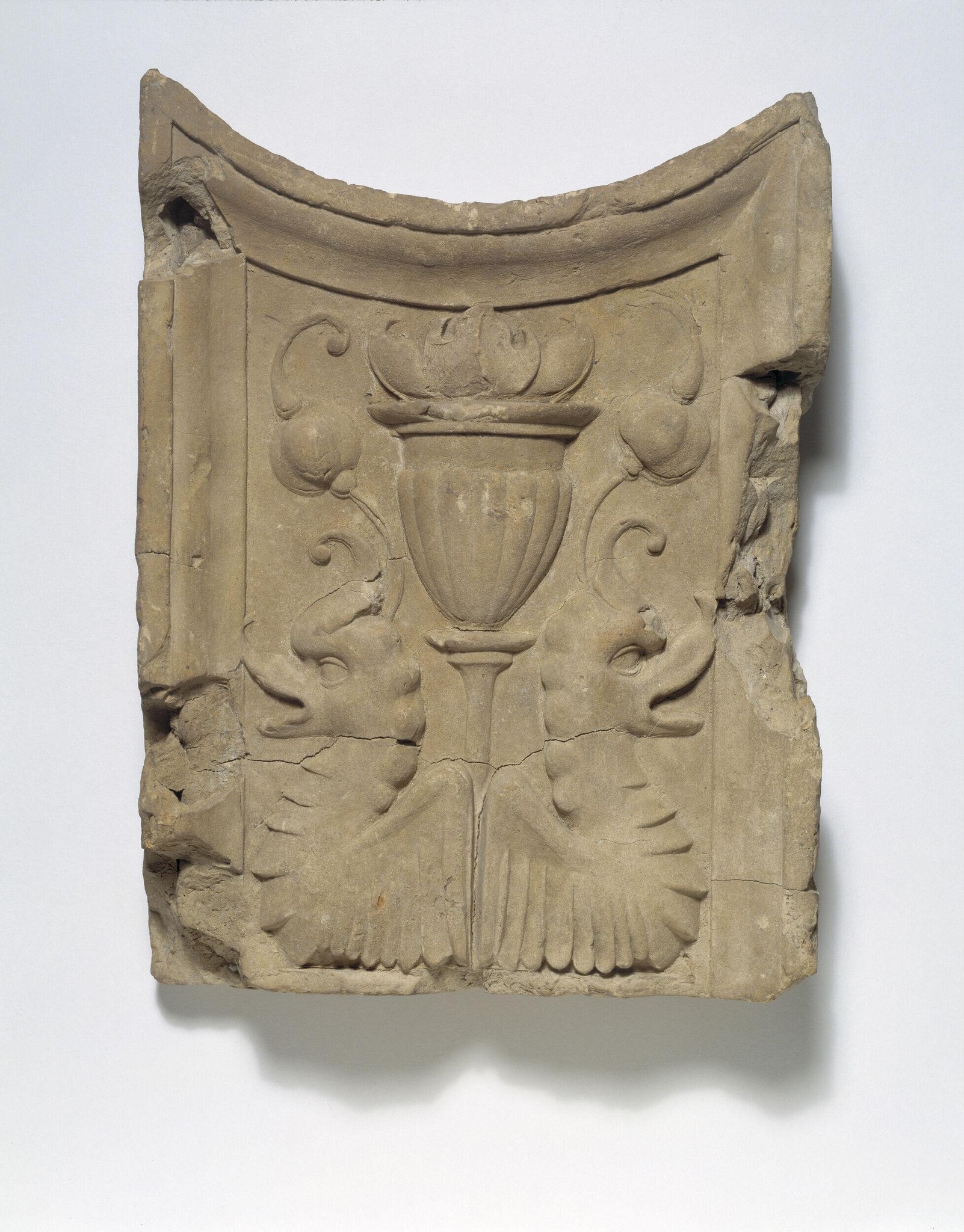
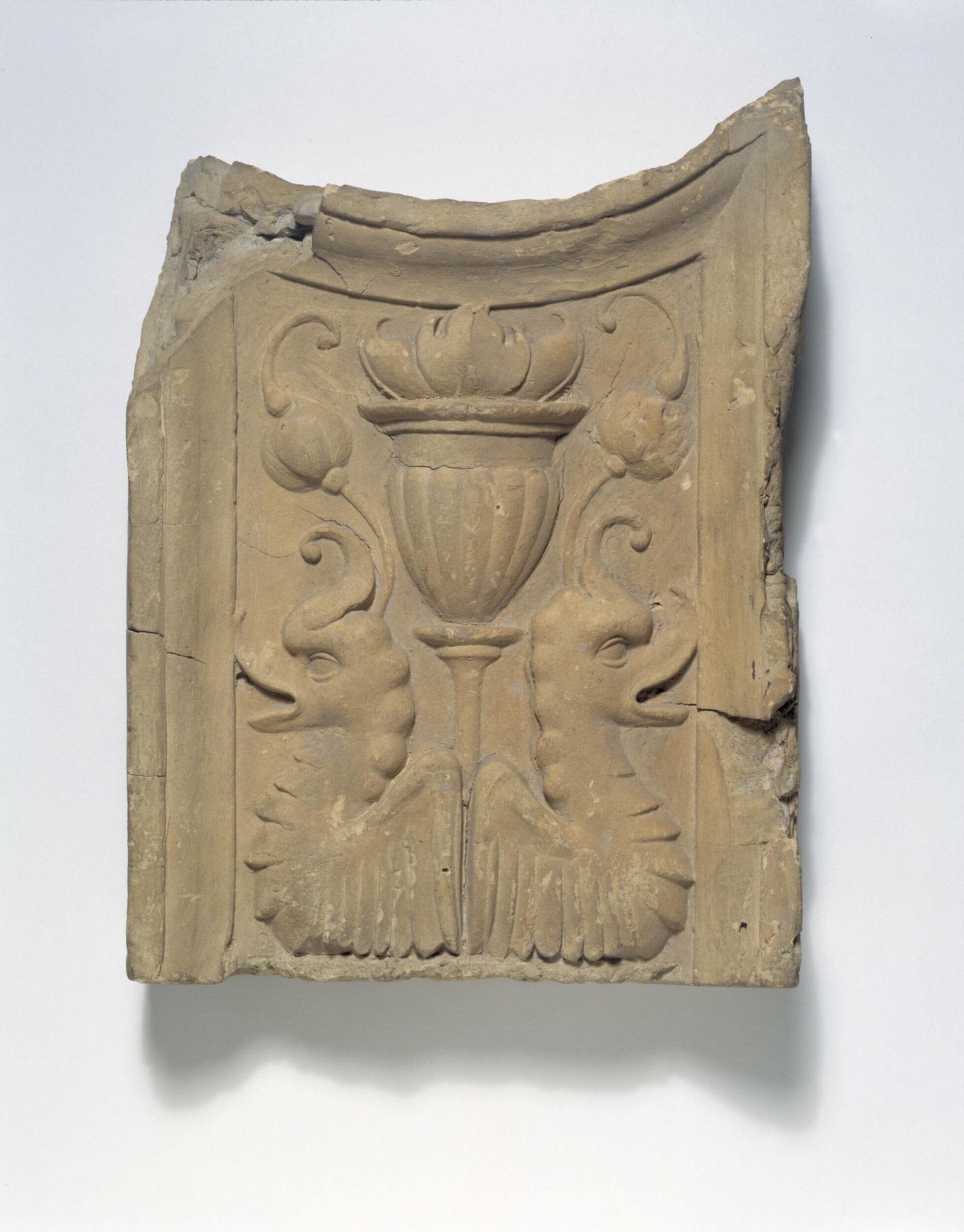
Fragment of a pilaster
- Gallery: British Galleries, Room 58
- Made in: London
- Date: ca. 1518-1522
- Object type: Fragment
- Materials: Terracotta
- Dimensions: Height 35.5 cm
- Museum: V&A South Kensington
- Collection record: V&A website
- Image © Victoria and Albert Museum, London.
Listen to the free audio guide
In the museum now? Point your phone at the next object and hear its guide.
About this object
Before you is a fragment of a pink terracotta pilaster, a rectangular column that once projected slightly from a wall. This relief features two winged griffins positioned back to back on either side of a base decorated with foliage. The top of the piece is concave, and you can see a moulded border that has become considerably chipped over time.
This decorative piece was likely created in London between 1518 and 1522 for Suffolk Place in Southwark. This vast house was built by Charles Brandon, the first Duke of Suffolk, who was a close friend and brother-in-law to King Henry the Eighth.
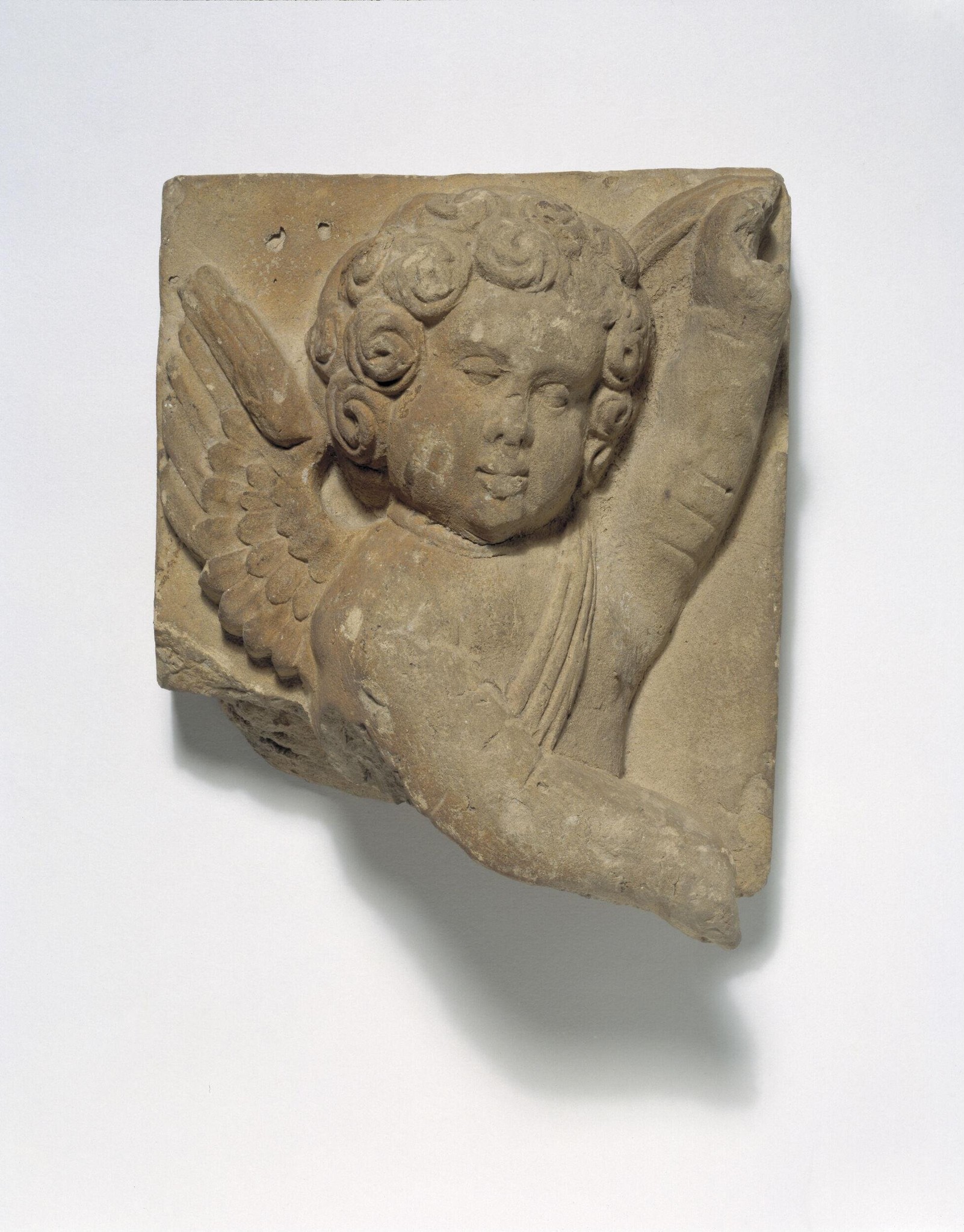
The terracotta was made from moulded clay that was dried and fired, making it a practical and economical material for decorating the exteriors of large buildings. This style of extensive terracotta decoration became very fashionable during the Tudor period, appearing on other major sites like Hampton Court Palace. These specific fragments were excavated from the site of Suffolk Place in 1937.
See it in person
Fragment of a pilaster is on display in British Galleries, Room 58 at the V&A South Kensington on Cromwell Road, London — free to enter. Choose V&A South Kensington on audioguide.london and take a photo of it to hear this free audio guide in six languages — no app download needed.
New, in beta. V&A support has just launched and is still improving: 1,000 objects with audio so far, with more added all the time.