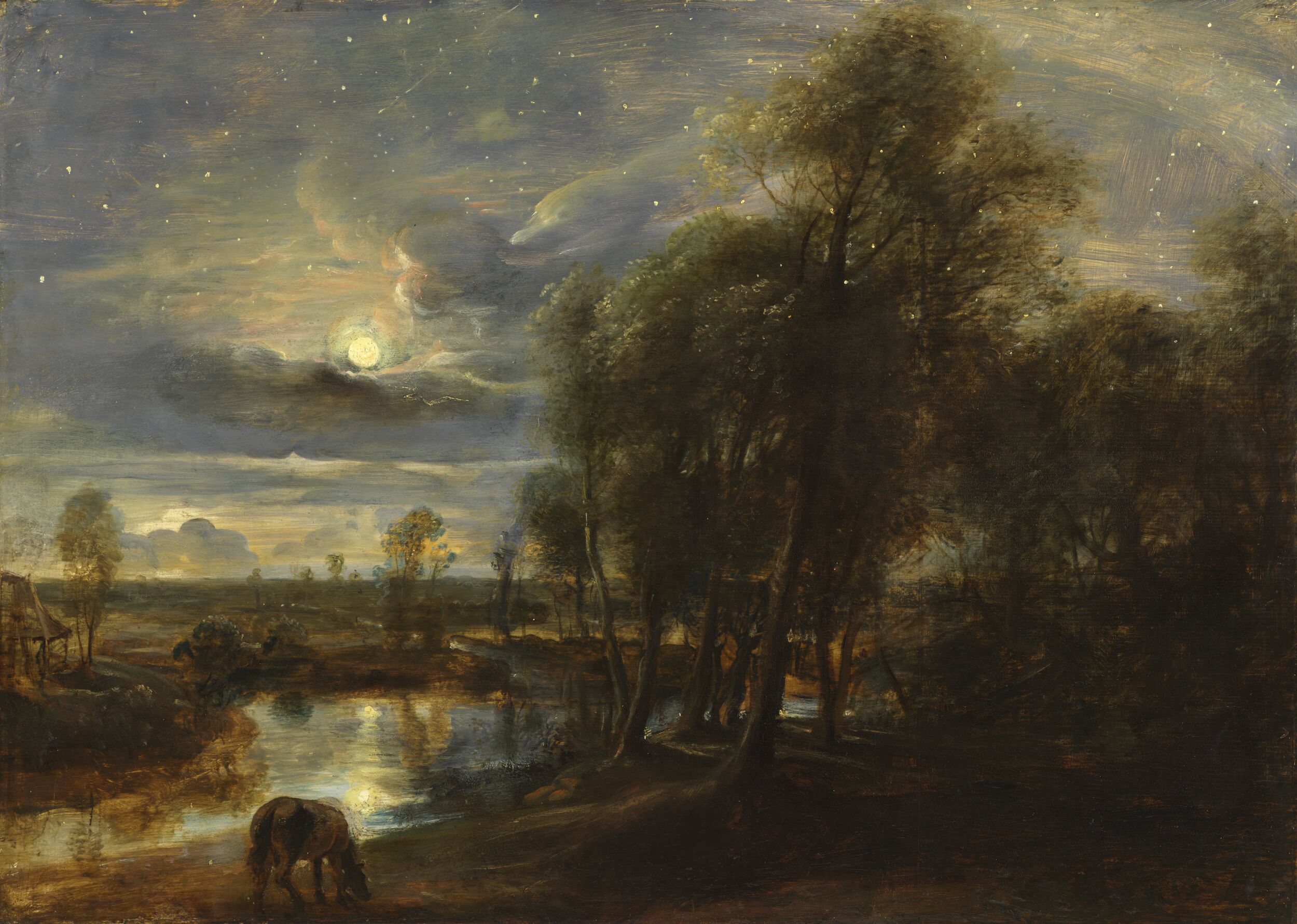
Landscape - Edge of a Wood

- Artist: John Crome
- Date: (circa) 1800 - 1820
- Medium: oil on canvas
- Museum: The Courtauld Gallery
- Collection record: The Courtauld Gallery website
Listen to the free audio guide
About this artwork
This is the “Landscape – Edge of a Wood” by John Crome. The canvas, painted around 1800–1820, offers a quiet slice of rural England seen through an early‑nineteenth‑century lens. The scene unfolds at the boundary of a birch‑lined forest, the edge of the woods a soft, almost misty line that invites the viewer’s eye to wander.
Crome’s brushwork here is deft and deliberate. He uses a muted palette of greens, ochres, and grays, which gives the whole piece a gentle, contemplative mood. The light is diffused, as if filtered through the canopy, lending the woodland a hushed quality. Notice how the foreground and background meld together; the composition is balanced, with a subtle diagonal created by the suggestion of a winding path or a fallen log.
The painting is executed in oil on canvas, a medium that allows for rich depth of color and subtle transitions—exactly what you see in the soft layering of the foliage. Crome’s choice to focus on a simple, almost everyday landscape reflects a respect for the natural world that was becoming increasingly popular in that era.
All in all, “Landscape – Edge of a Wood” is a gentle, evocative study of light, color, and place, captured in a moment that feels both timeless and grounded in its early 19th‑century roots.
See it in person
Landscape - Edge of a Wood hangs in The Courtauld Gallery at Somerset House, London. Point your phone at any artwork there and audioguide.london plays a free audio guide in six languages — no app download needed.