Pietre Dure Cabinet with St Catherina of Alexandria
- Gallery: Furniture, Room 133, The Dr Susan Weber Gallery
- Date: c.1630-1640
- Object type: Cabinet
- Dimensions: Height (Cabinet) 57.5 cm; Length (Cabinet) 89.5 cm; Depth (Cabinet) 35.6 cm
- Museum: V&A South Kensington
- Collection record: V&A website
- Image © Victoria and Albert Museum, London.
Listen to the free audio guide
In the museum now? Point your phone at the next object and hear its guide.
About this object
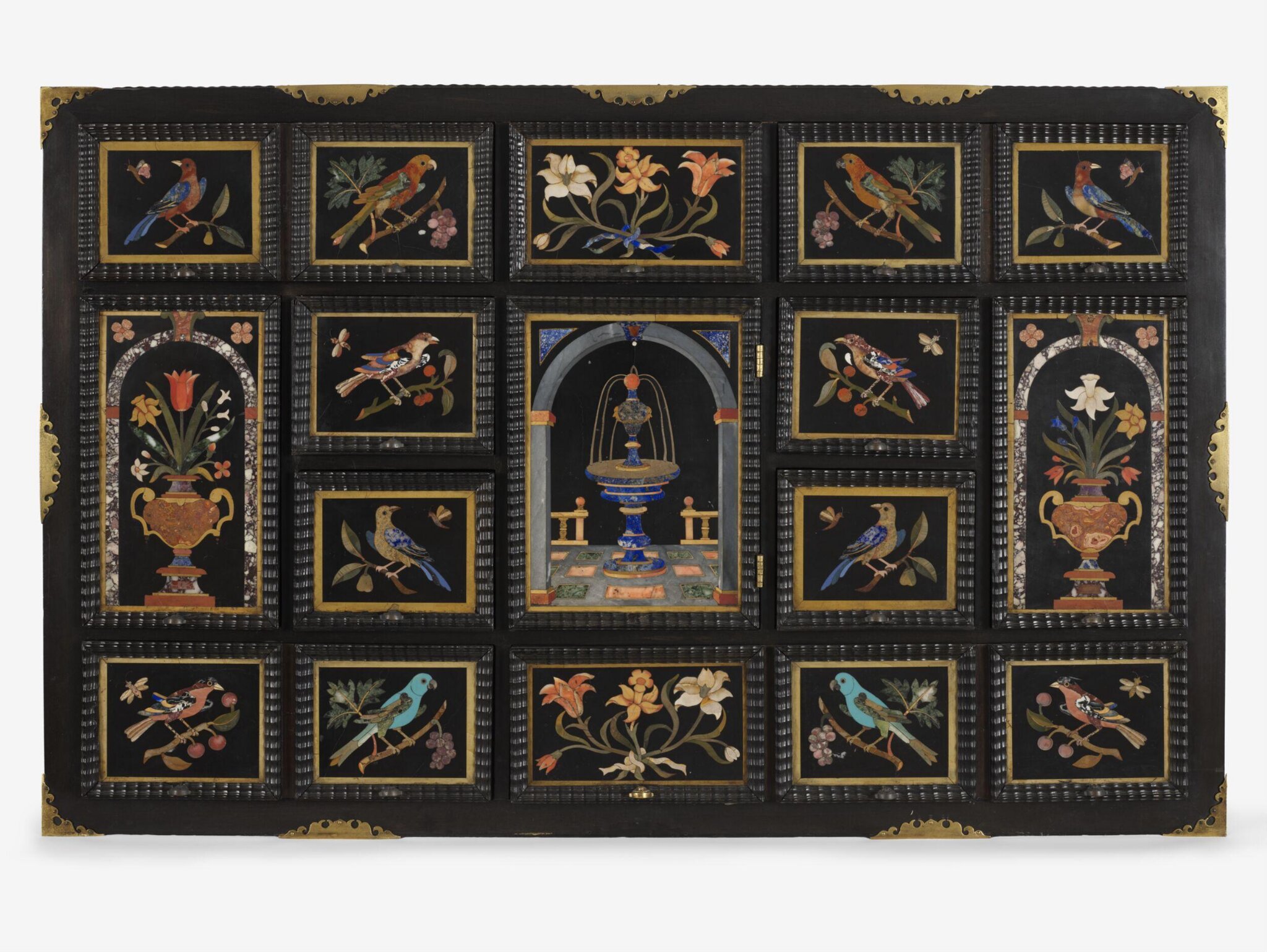
Before you is a remarkable cabinet set upon an English stand of carved, gilded wood. The cabinet itself is likely of Northern European origin, featuring ebonised wood and brass mounts.
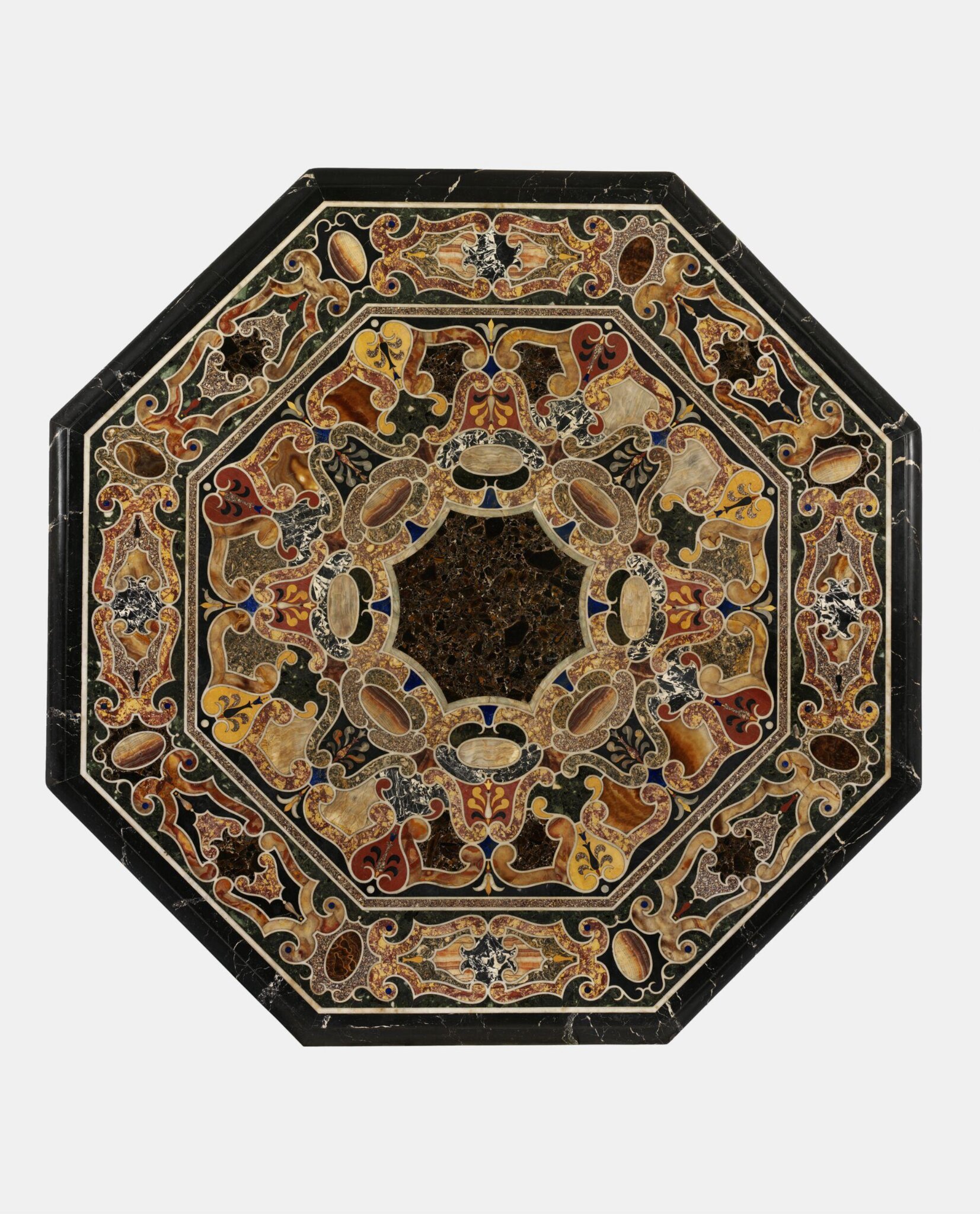
The most striking feature is the series of stone mosaic panels, created using a technique known as pietre dure. In Florence, craftsmen perfected this method by cutting slices of semiprecious stones into precise shapes and assembling them face down. Once consolidated with resin and backed with slate, these stones were polished to a smooth finish. By the seventeenth century, this technique allowed artists to create incredibly detailed stone paintings.
If you look closely at the panels, you can see typical Florentine motifs, such as birds, flowers, and even a courtyard fountain, all set against a dark background. Some panels even use transparent stones to depict bright details, like cherries. Finally, look for a hidden panel inside the central door; it depicts St Catherina of Alexandria, inspired by a painting by Artemisia Gentileschi.
See it in person
Pietre Dure Cabinet with St Catherina of Alexandria is on display in Furniture, Room 133, The Dr Susan Weber Gallery at the V&A South Kensington on Cromwell Road, London — free to enter. Choose V&A South Kensington on audioguide.london and take a photo of it to hear this free audio guide in six languages — no app download needed.
New, in beta. V&A support has just launched and is still improving: 1,000 objects with audio so far, with more added all the time.