St Simon
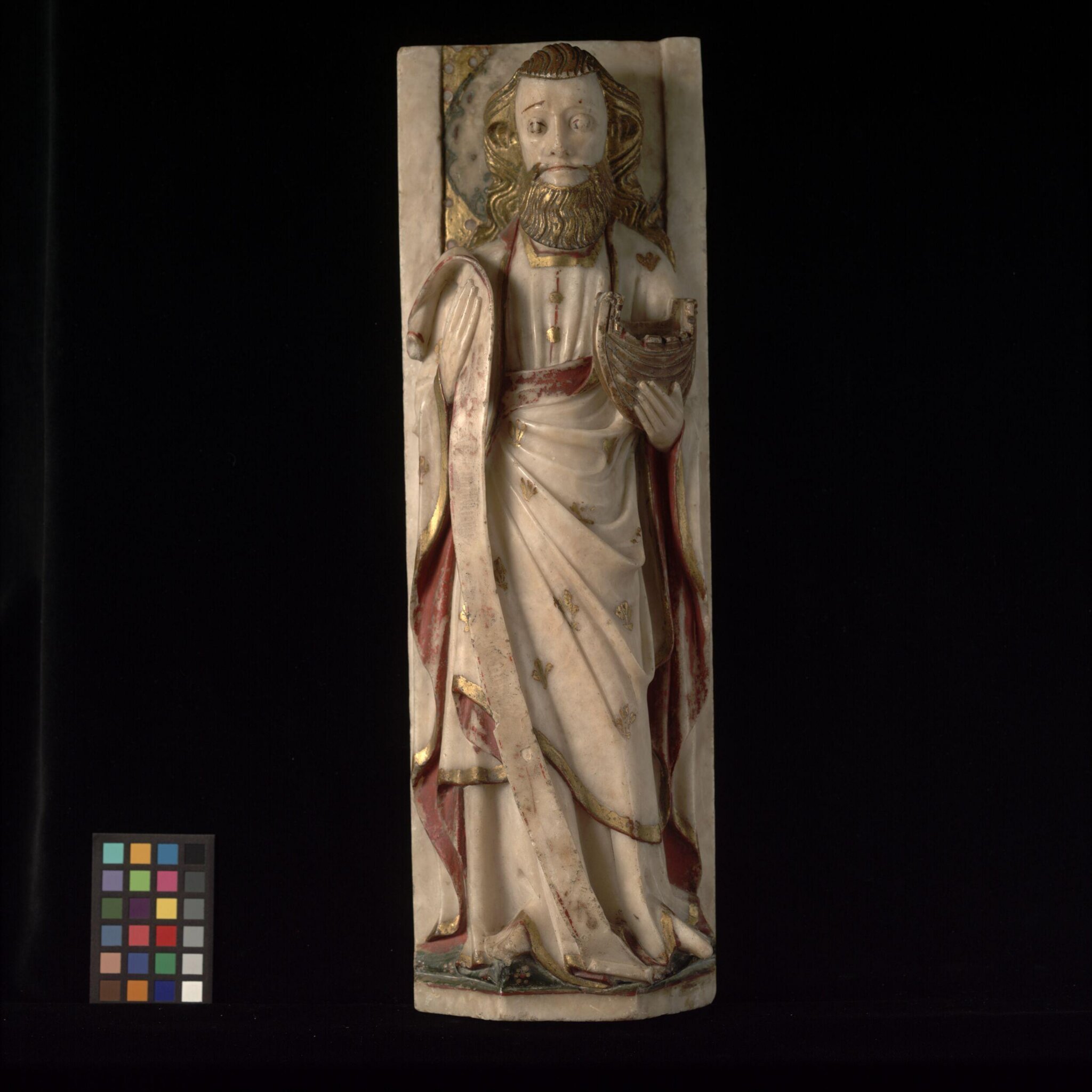
- Gallery: Sculpture, Room 111, The Gilbert Bayes Gallery
- Made in: England
- Date: 1440-1460
- Object type: Panel
- Materials: Carved, painted and gilt alabaster
- Style: Medieval
- Dimensions: Height 45.0 cm; Width 14.4 cm
- Museum: V&A South Kensington
- Collection record: V&A website
- Image © Victoria and Albert Museum, London.
Listen to the free audio guide
In the museum now? Point your phone at the next object and hear its guide.
About this object
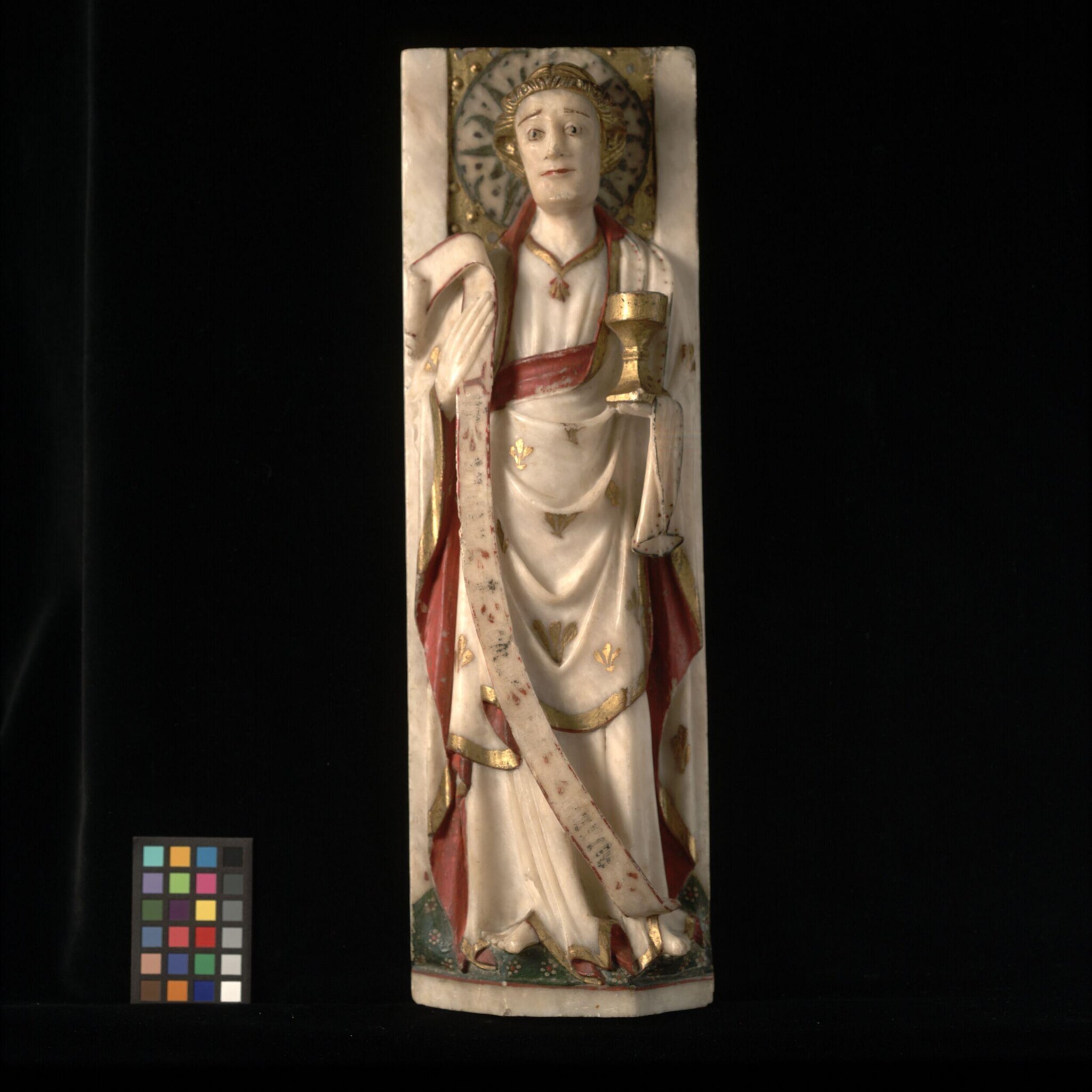
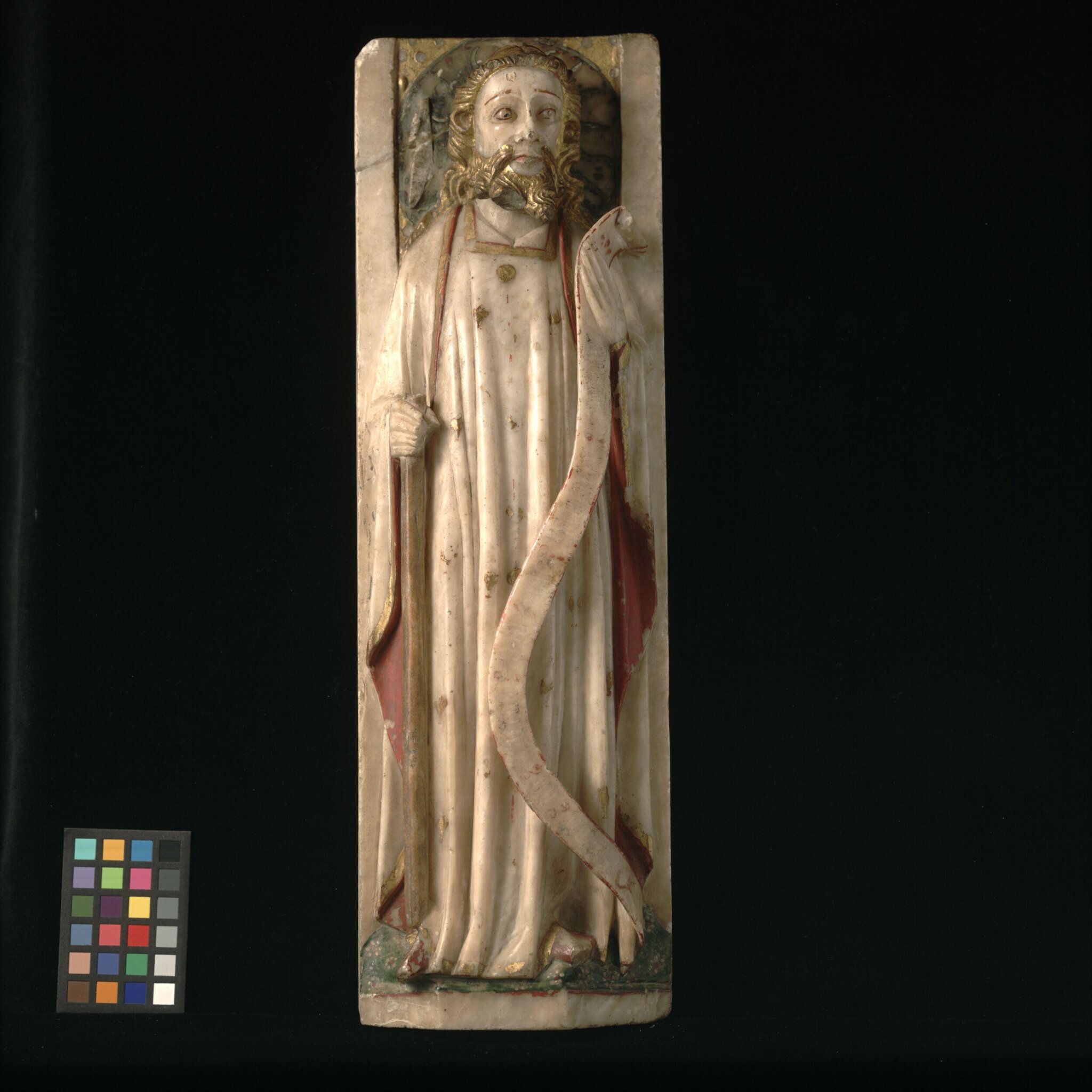
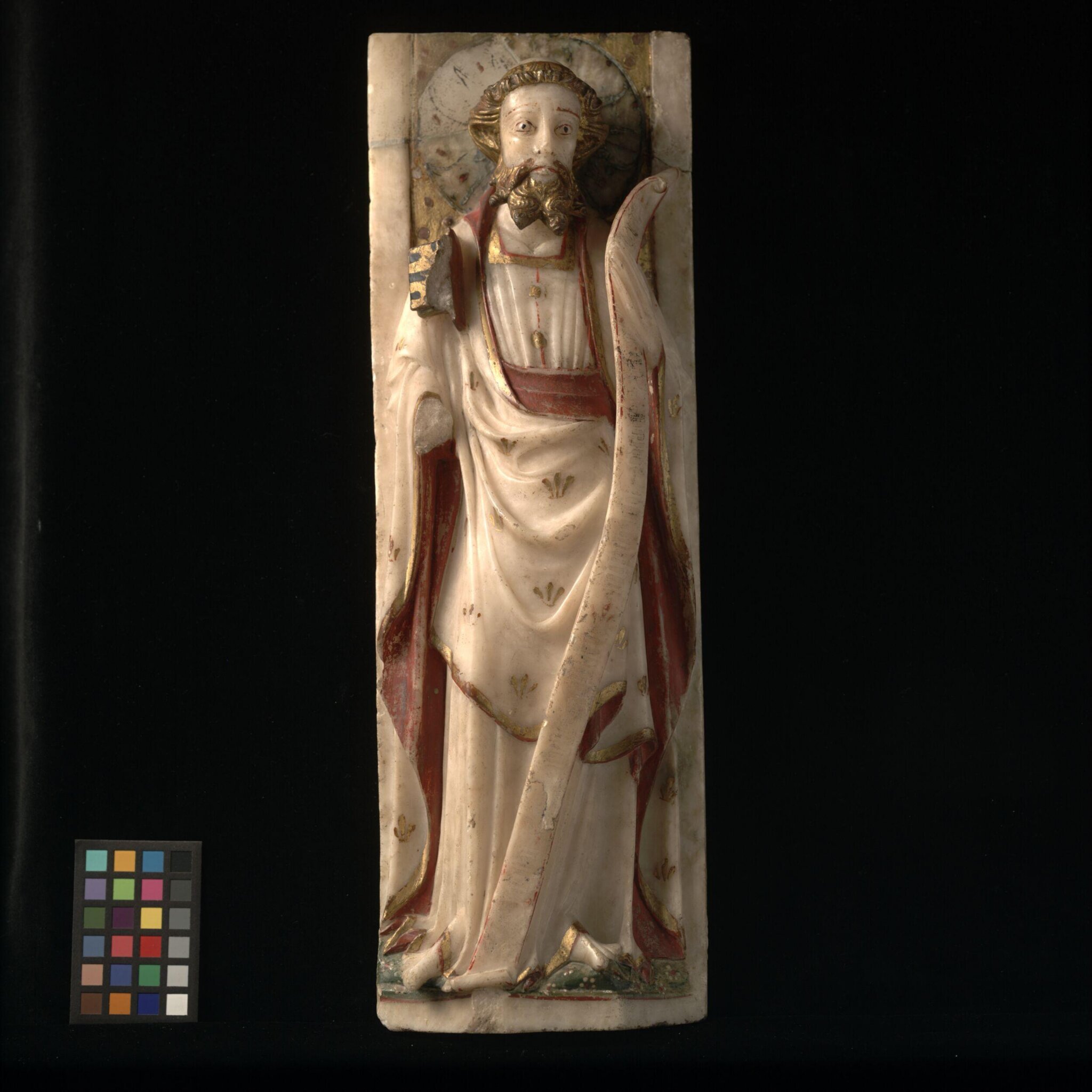
Before you is "St Simon", a carved alabaster panel from England, created between 1440 and 1460. This figure is one of twelve apostles that likely formed part of a rood-screen, standing in a line just below a large figure of the crucified Christ.
Take a look at the fine details of the carving. St Simon is shown with a spade-shaped beard, wearing a gown and a cloak that still shows traces of red paint in its lining. In his left hand, he holds a small boat, which serves as his specific symbol. His right hand holds a painted scroll that reads, "Remissione peccator," meaning the forgiveness of sins.
The use of alabaster was very popular in England during this time. Because it is a soft stone, it is easy to carve and can be polished to a smooth finish. You can see how the natural color of the stone was used to represent the saint's face and flesh, while gold gilding adds a striking touch to his hair, beard, and the edges of his clothing.
See it in person
St Simon is on display in Sculpture, Room 111, The Gilbert Bayes Gallery at the V&A South Kensington on Cromwell Road, London — free to enter. Choose V&A South Kensington on audioguide.london and take a photo of it to hear this free audio guide in six languages — no app download needed.
New, in beta. V&A support has just launched and is still improving: 1,000 objects with audio so far, with more added all the time.