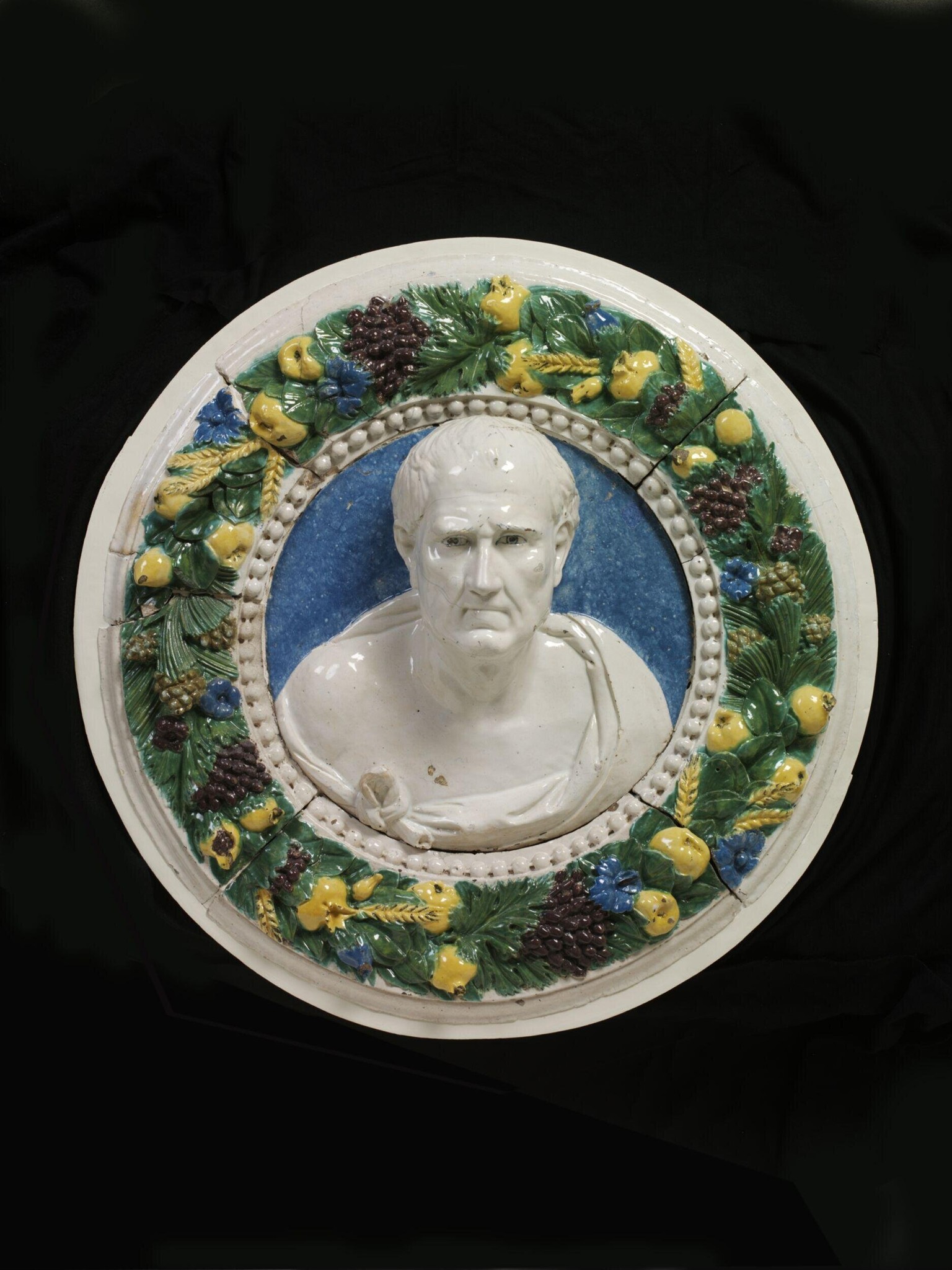
The Blind Homer
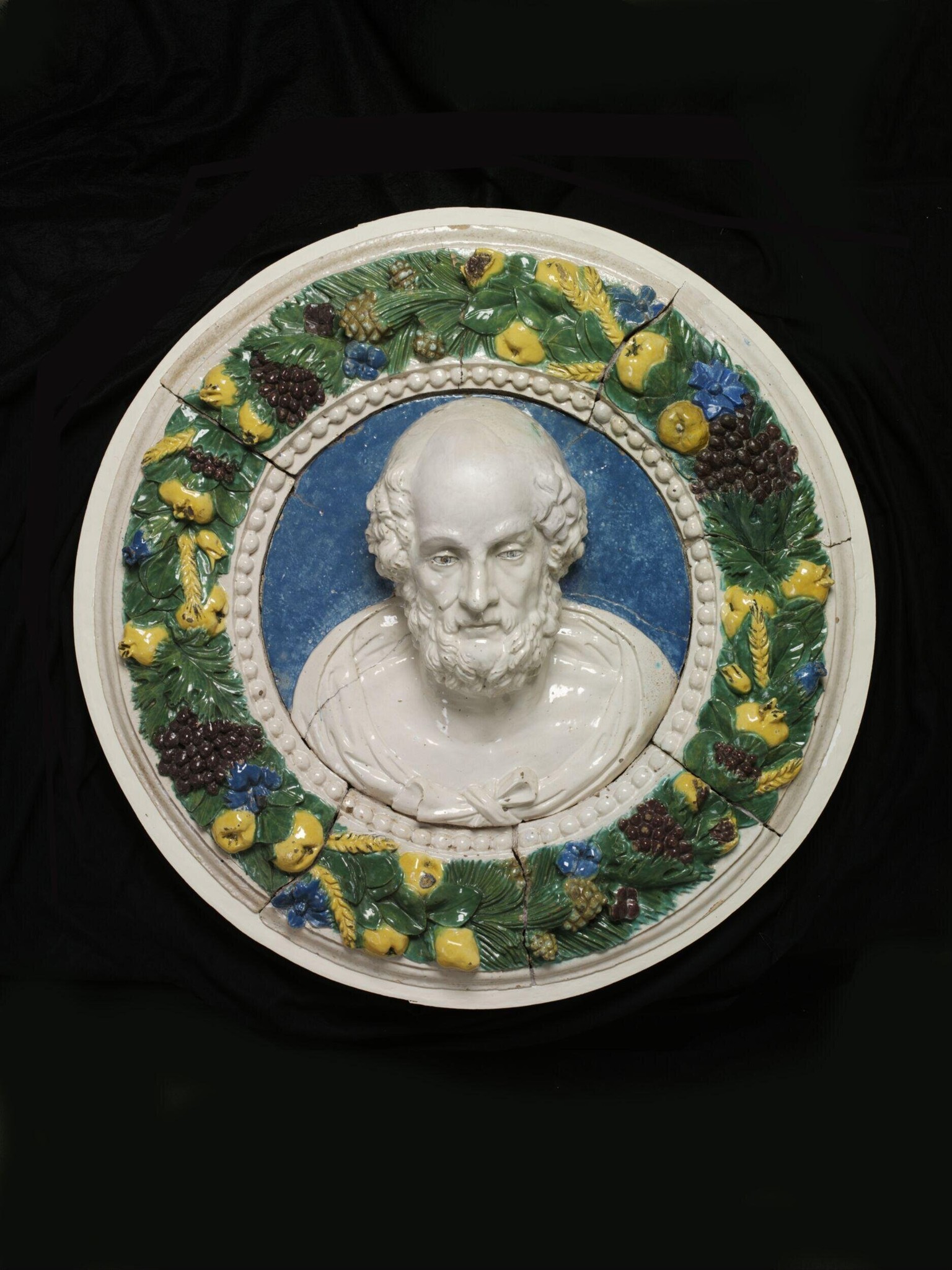
- Gallery: Medieval & Renaissance, Room 50a, The Paul and Jill Ruddock Gallery
- Maker: Giovanni della Robbia (workshop of)
- Made in: Florence
- Date: ca. 1520 - ca. 1525
- Object type: Roundel
- Materials: Polychrome tin-glazed terracotta
- Dimensions: Diameter 83.8 cm; Depth 25 cm
- Museum: V&A South Kensington
- Collection record: V&A website
- Image © Victoria and Albert Museum, London.
Listen to the free audio guide
In the museum now? Point your phone at the next object and hear its guide.
About this object
Before you is "The Blind Homer", a circular relief made of polychrome tin-glazed terracotta. This work comes from the workshop of Giovanni della Robbia in Florence, dating to approximately 1520 to 1525.
The relief features the head and shoulders of a bearded man, traditionally identified as the Greek poet Homer, the author of the Iliad and the Odyssey. He is shown wearing a white toga knotted at the front, set against a striking blue ground. During the Renaissance, it was common to display the likenesses of famous figures from antiquity on the outside of buildings to demonstrate a passion for classical learning.
This roundel was likely designed to be placed high up on a building facade, perhaps as part of a series of portraits. It shares a similar style to the busts of saints and prophets created by the Della Robbia workshop, a family of sculptors famous for their innovative use of colorful, glazed terracotta.
See it in person
The Blind Homer is on display in Medieval & Renaissance, Room 50a, The Paul and Jill Ruddock Gallery at the V&A South Kensington on Cromwell Road, London — free to enter. Choose V&A South Kensington on audioguide.london and take a photo of it to hear this free audio guide in six languages — no app download needed.
New, in beta. V&A support has just launched and is still improving: 1,000 objects with audio so far, with more added all the time.