Writing cabinet
- Gallery: Europe 1600-1815, Room 3
- Maker: Heinrich Ludwig Rohde (made)
- Made in: Mainz
- Date: 1738
- Object type: Writing cabinet
- Materials: Veneered in walnut on pine, with inlay of various woods and bone; carved and gilded scrollwork and plinth
- Dimensions: Height 2500 mm; Width 1030 mm; Depth 570 mm
- Museum: V&A South Kensington
- Collection record: V&A website
- Image © Victoria and Albert Museum, London.
Listen to the free audio guide
In the museum now? Point your phone at the next object and hear its guide.
About this object
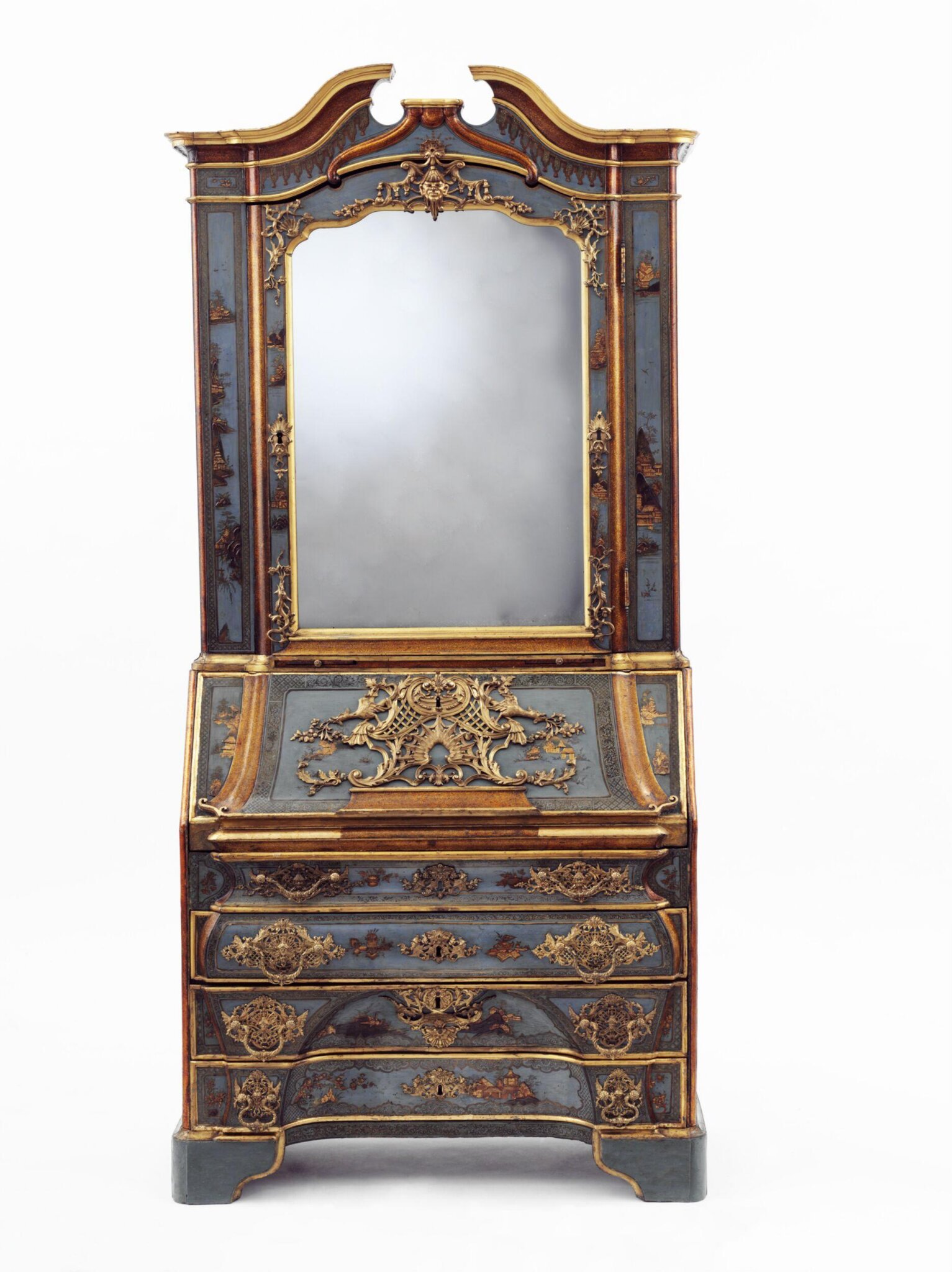
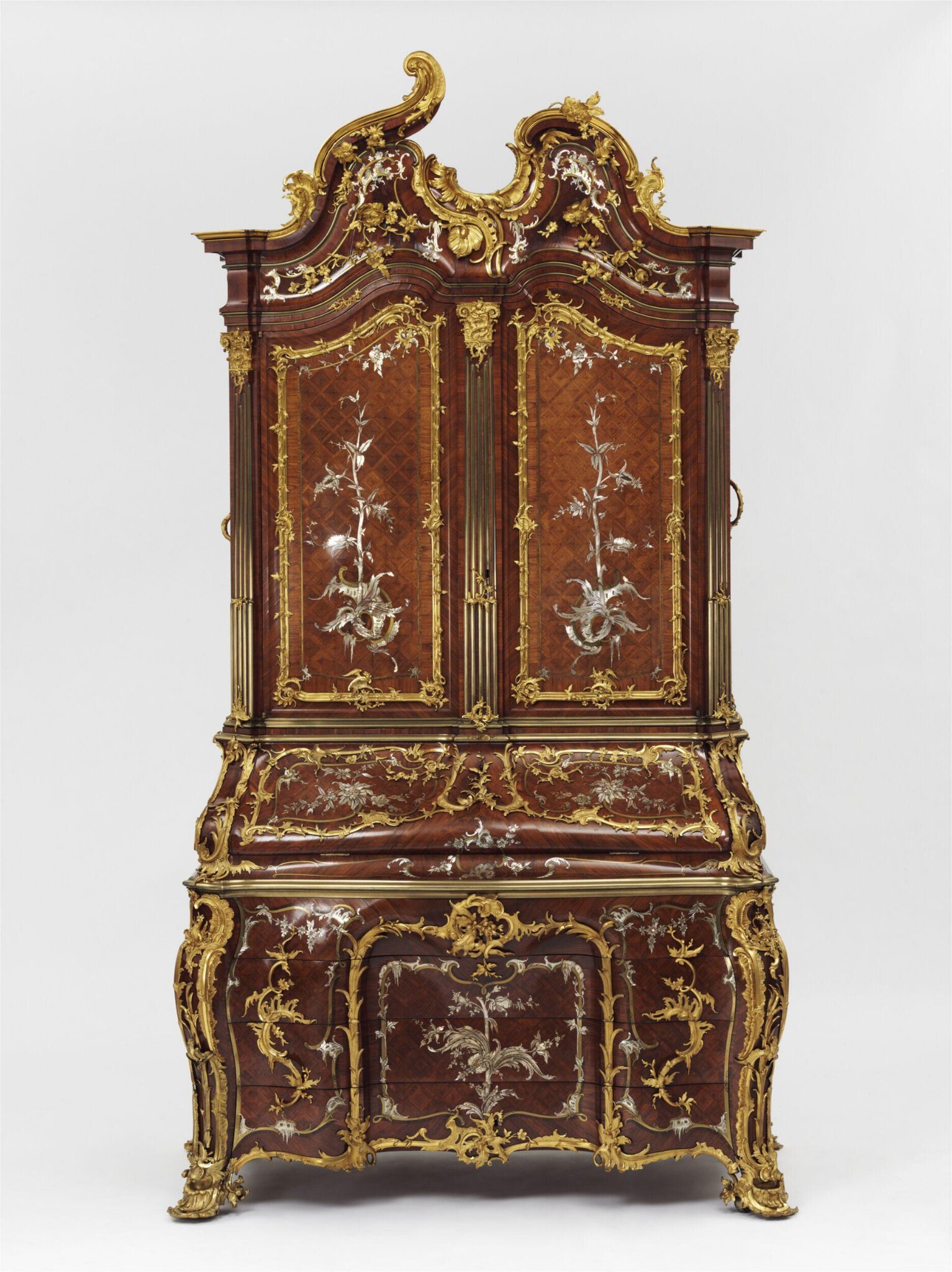
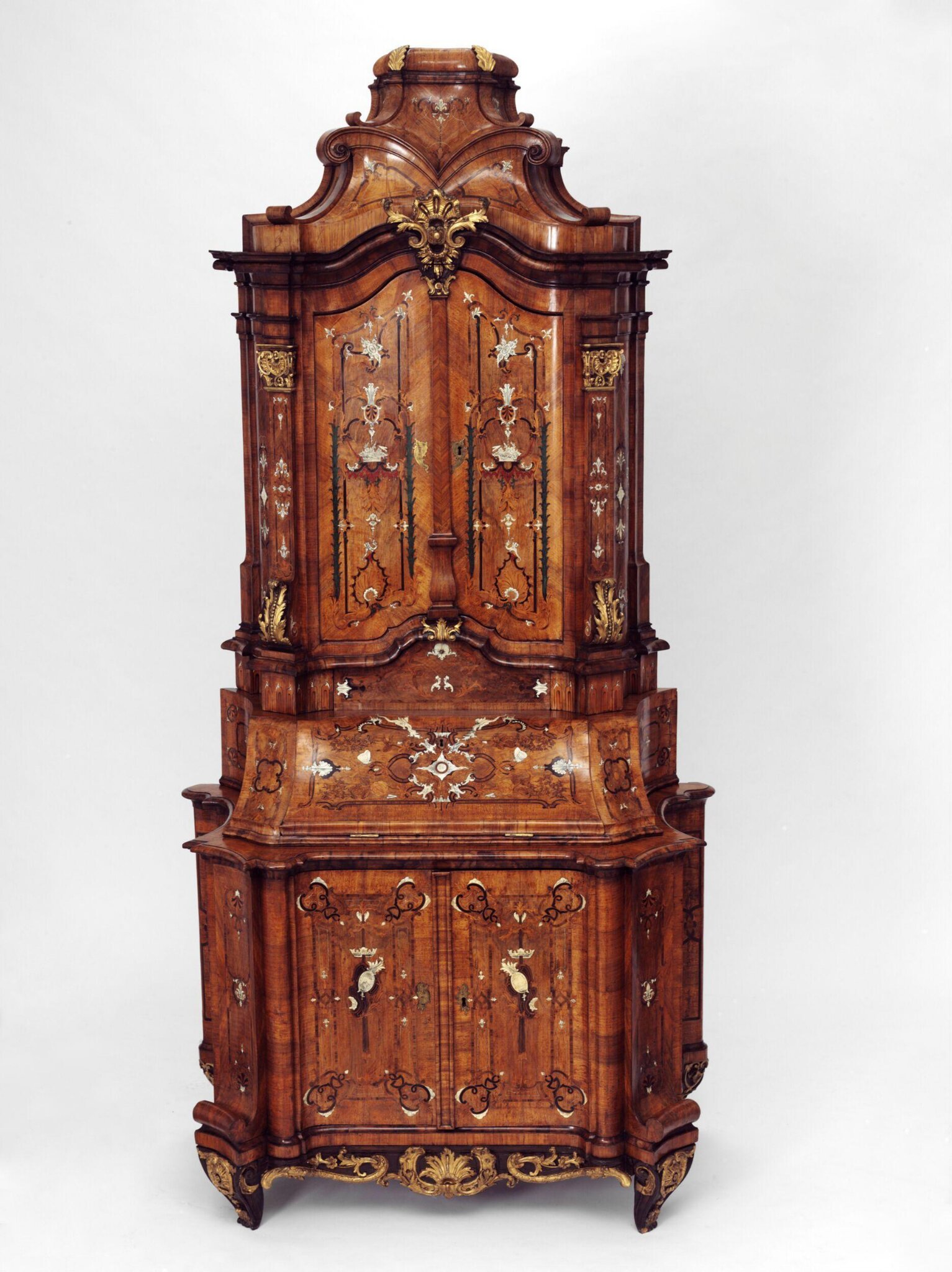
Before you is a striking three-section writing cabinet, known as a cantourgen, created in Mainz, Germany, around 1738. This elegant piece is veneered in walnut over a pine frame and is decorated with rich, colorful marquetry made from various woods, ivory, and bone.
As you look closely at the lower doors, notice the small ivory cartouches. These contain a chronogram, a clever type of inscription where specific capitalized letters are added together as Roman numerals to reveal the date of the piece.
Moving your eyes upward, the central writing compartment features ambitious designs, including naturalistic flowers like roses and tiny engraved figures of dragons, butterflies, and crickets. The entire cabinet is accented with carved, gilded wood that mimics the look of expensive brass mounts.
This specific form was highly significant in Mainz. For many years, creating a cabinet like this was a required masterpiece for apprentices to prove their skill. Interestingly, while the decorative style is distinctly German, the overall shape was actually inspired by furniture styles from Britain.
See it in person
Writing cabinet is on display in Europe 1600-1815, Room 3 at the V&A South Kensington on Cromwell Road, London — free to enter. Choose V&A South Kensington on audioguide.london and take a photo of it to hear this free audio guide in six languages — no app download needed.
New, in beta. V&A support has just launched and is still improving: 1,000 objects with audio so far, with more added all the time.