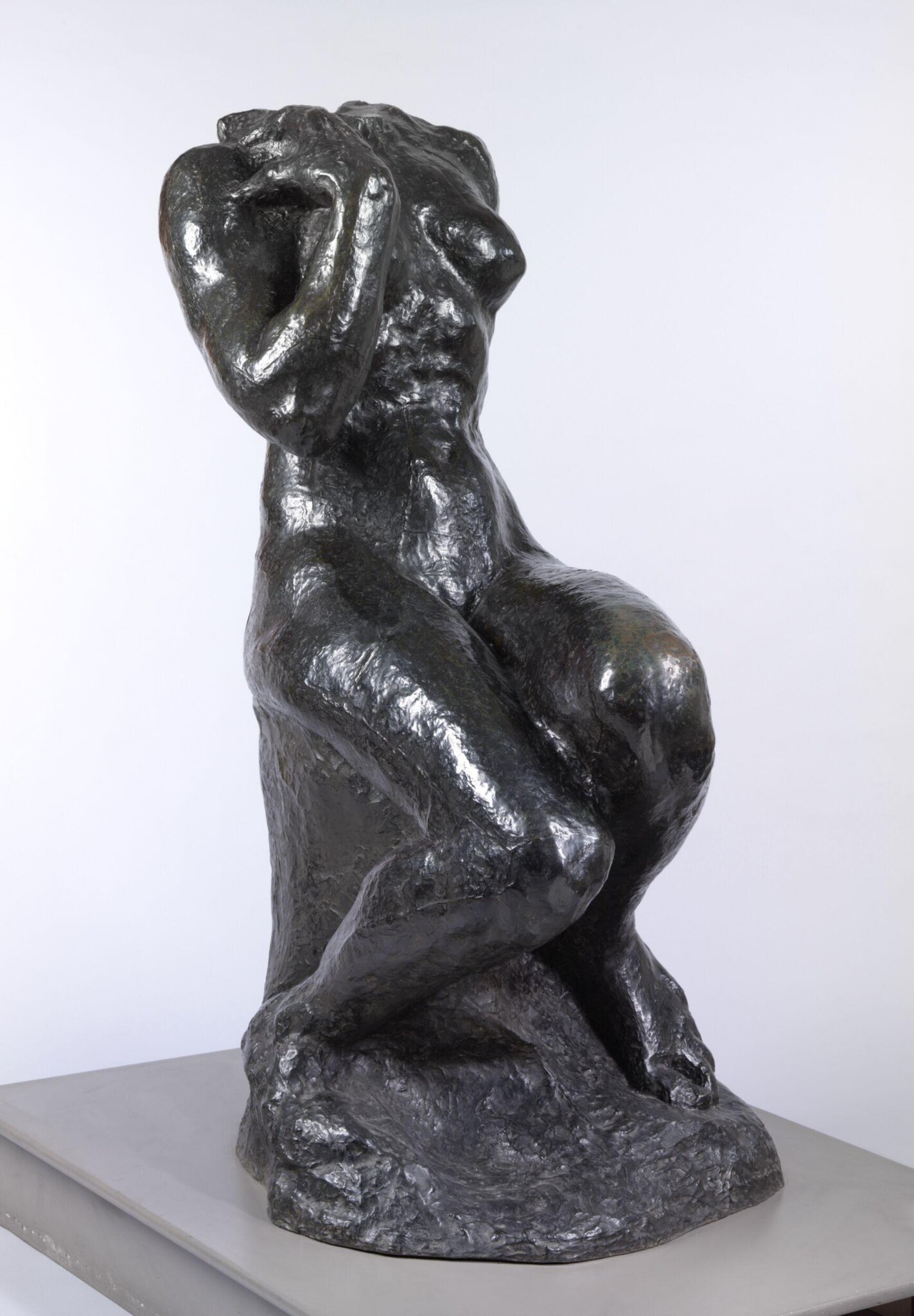
Crouching woman
- Gallery: Sculpture, Room 21, The Dorothy and Michael Hintze Galleries
- Maker: Auguste Rodin (designer and maker)
- Made in: France
- Date: ca. 1891
- Object type: Figure
- Materials: Bronze
- Dimensions: Height 53 cm; Width 98 cm; Depth 44 cm
- Museum: V&A South Kensington
- Collection record: V&A website
- Image © Victoria and Albert Museum, London.
Listen to the free audio guide
In the museum now? Point your phone at the next object and hear its guide.
About this object
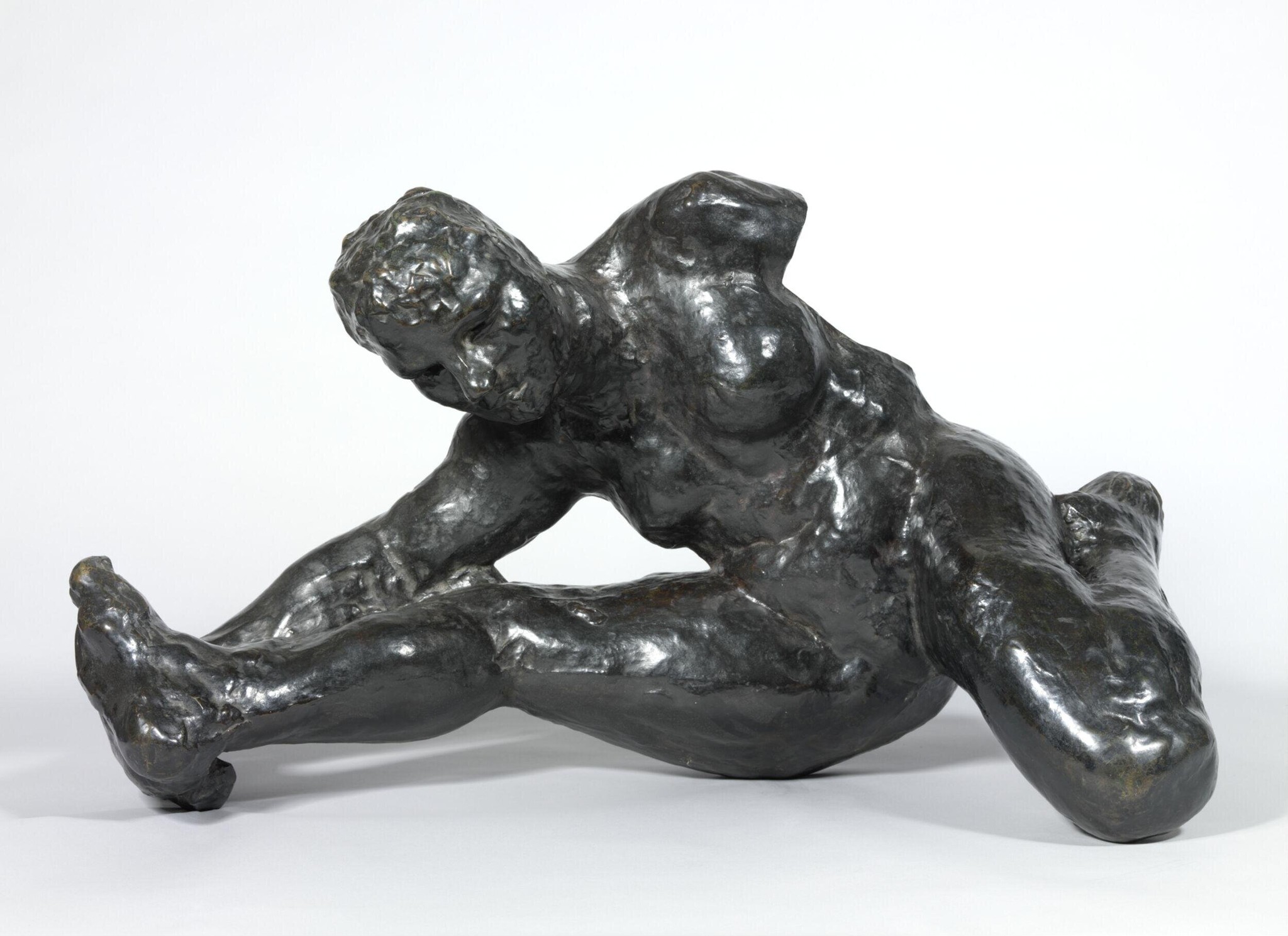
Before you is "Crouching woman", a bronze sculpture created by Auguste Rodin around 1891. As you look at the figure, notice the striking contrast between the rough and smooth areas of the bronze. This unfinished appearance is a key feature of the work.
This piece is quite unique because it is actually composed of several different parts. Rodin took a head, limbs, and a torso that were originally conceived as completely separate elements, and assembled them into this single figure. This technique creates a sense of dynamic unease, as the fusion of these pieces disturbs the natural equilibrium of the body.
By combining these separate parts, Rodin moved away from his earlier focus on anatomical realism toward a more experimental and conceptual approach. This method helped liberate the human form from any specific context. This particular sculpture is related to Rodin's studies for Iris, Messenger of the Gods, which was part of a larger project for a monument to Victor Hugo.
See it in person
Crouching woman is on display in Sculpture, Room 21, The Dorothy and Michael Hintze Galleries at the V&A South Kensington on Cromwell Road, London — free to enter. Choose V&A South Kensington on audioguide.london and take a photo of it to hear this free audio guide in six languages — no app download needed.
New, in beta. V&A support has just launched and is still improving: 1,000 objects with audio so far, with more added all the time.