The Virgin of the Rocks
- Artist: Leonardo da Vinci
- Date: about 1491/2-9 and 1506-8
- Medium: oil on wood
- Museum: The National Gallery
- Collection record: The National Gallery website
Listen to the free audio guide
About this artwork
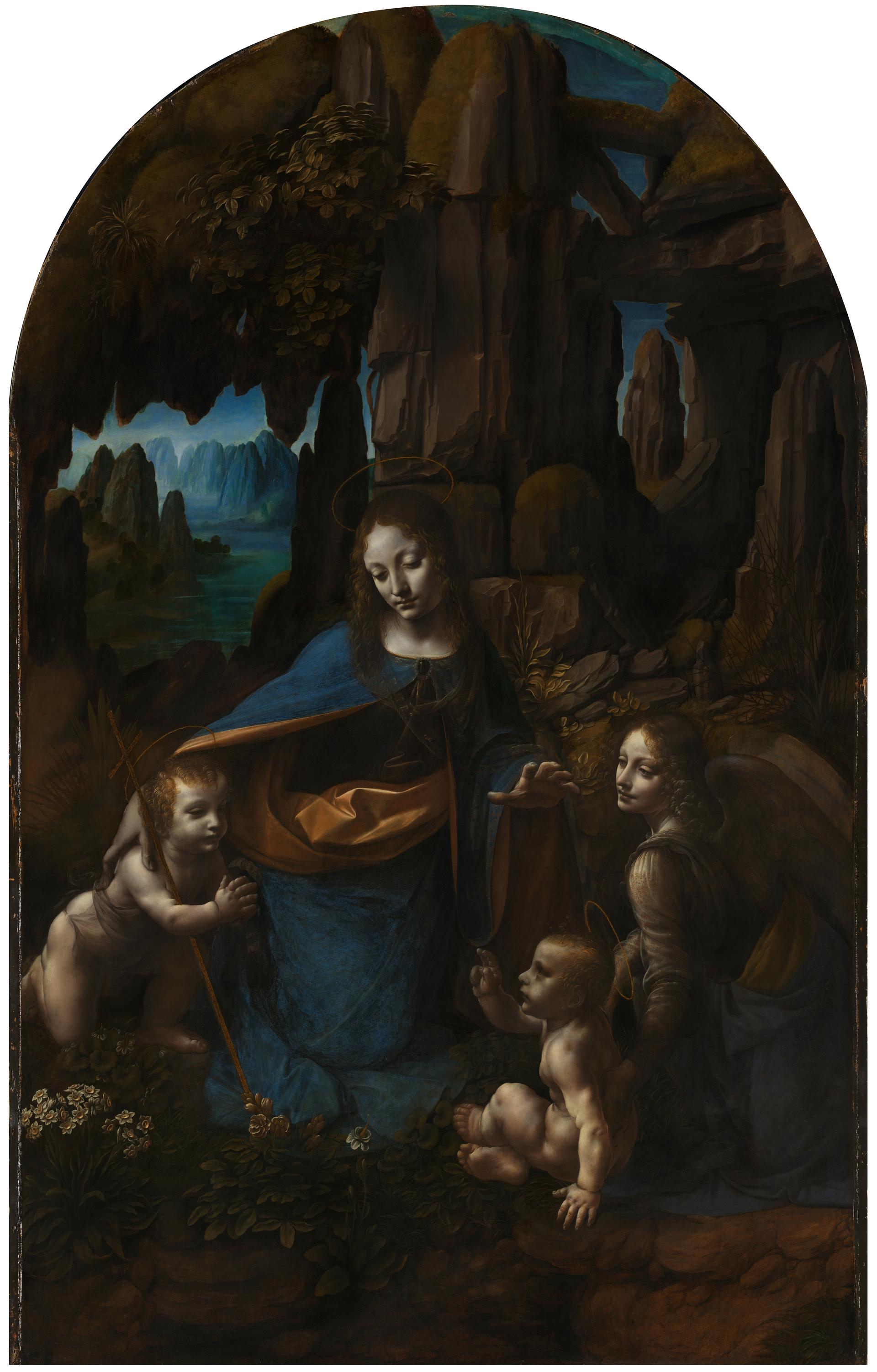
This is the "The Virgin of the Rocks" by Leonardo da Vinci. Painted in the Italian north, this beautiful work showcases Leonardo's innovative techniques to create a sense of depth and dimension. The painting depicts the Virgin Mary with Saint John the Baptist and an angel, all kneeling to adore the infant Christ.
Leonardo has used a range of innovative techniques to achieve this effect. For example, he blurred the edges of the figures' forms to indicate the shadows that envelop them. He also used aerial perspective to create the illusion of a vast landscape setting, by painting distant mountains in blue and softening their edges to make them appear hazy.
The painting was part of a large altarpiece made for the church of San Francesco Grande in Milan, to celebrate the Immaculate Conception of the Virgin Mary. It replaced an earlier version painted by Leonardo, now housed in the Louvre in Paris. This version is particularly interesting as it shows some of Leonardo's most mysterious and complex ideas.
Leonardo began his painting career in Florence but later moved to Milan where he received this commission. He used his inventive techniques to create a new composition for the Immaculate Conception, which was still a relatively new idea at the time.
See it in person
The Virgin of the Rocks hangs in The National Gallery on Trafalgar Square, London — free to enter. Point your phone at any artwork there and audioguide.london plays a free audio guide in six languages — no app download needed.