The Wilton Diptych
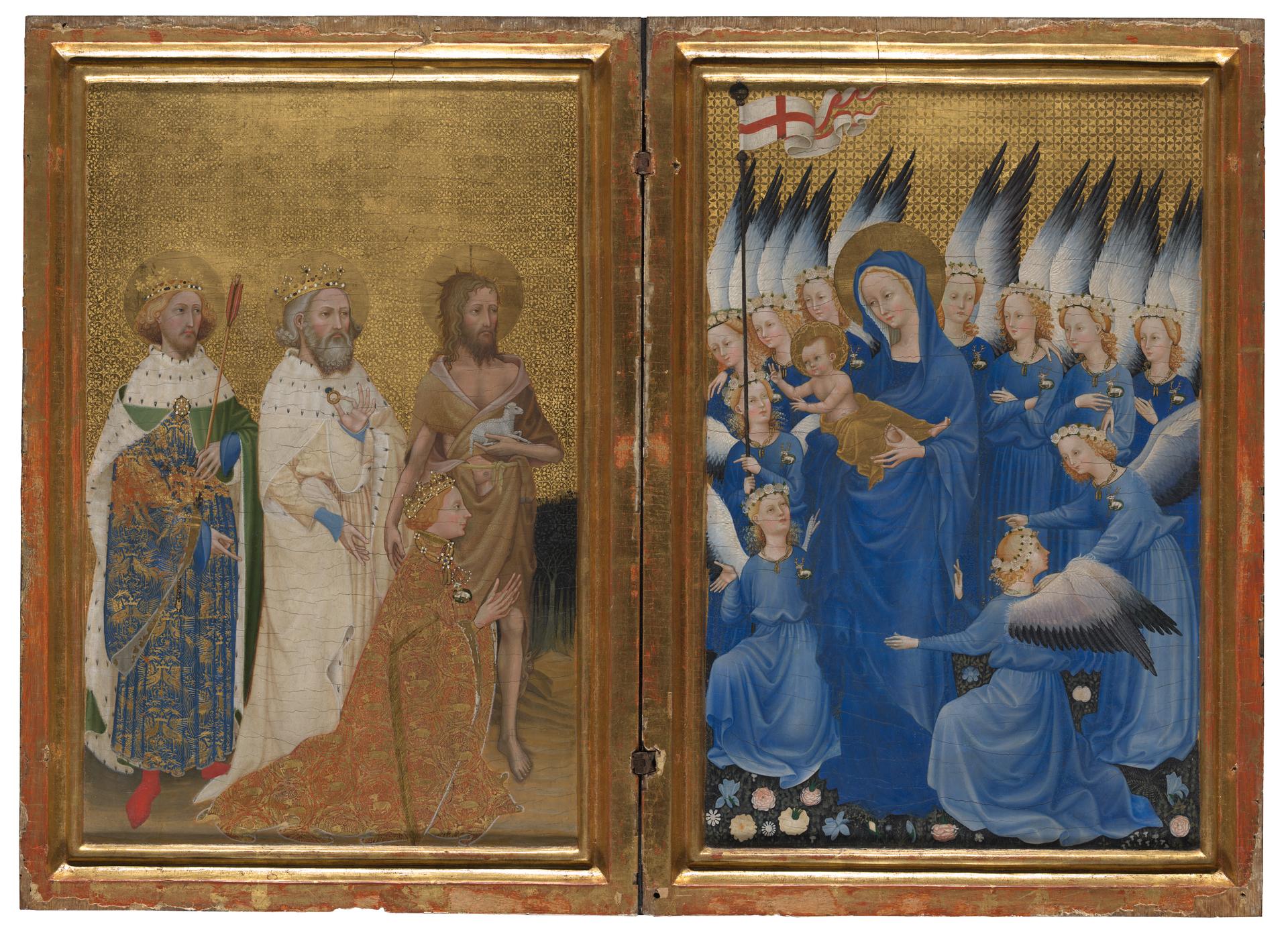
- Artist: English or French
- Date: about 1395-9
- Medium: egg tempera on wood
- Museum: The National Gallery
- Collection record: The National Gallery website
Listen to the free audio guide
About this artwork
The Wilton Diptych, painted in England around 1395-9, is one of the most impressive English panel paintings to have survived from the Middle Ages. It was made for Richard II, King of England from 1377 to 1399, and combines religious and secular imagery to embody his personal conception of kingship.
On the inside of this magnificent diptych, the young King kneels in a barren landscape, surrounded by three saints: John the Baptist, Edward the Confessor, and Edmund. These saints present the King to the Virgin Mary and Christ Child, who are depicted in a flowery meadow surrounded by angels. One of these angels carries a white standard with a red cross.
The richness of the tempera paintwork, the meticulously stamped gilding, and the refinement of detail are truly extraordinary. The infant Christ is wrapped in cloth of gold, and stippled within his halo is a crown of thorns and three nails – symbols of the Passion.
The imagery may seem conventional, but it was intensely personal to Richard. He was deeply devoted to all three saints, who were central to his idea of sacred kingship. Richard shows himself as he wished to be seen: the divinely appointed descendant of a line of saintly kings. By blessing the banner, Christ confirms Richard's belief in the sacred nature of his rule.
This little altarpiece was made for Richard's private use, and it might have been placed on the altar of a small chapel in Westminster Abbey or carried from one chapel to another. It's fascinating to think about how this painting reflects Richard's unpopularity and eventual downfall.
See it in person
The Wilton Diptych hangs in The National Gallery on Trafalgar Square, London — free to enter. Point your phone at any artwork there and audioguide.london plays a free audio guide in six languages — no app download needed.