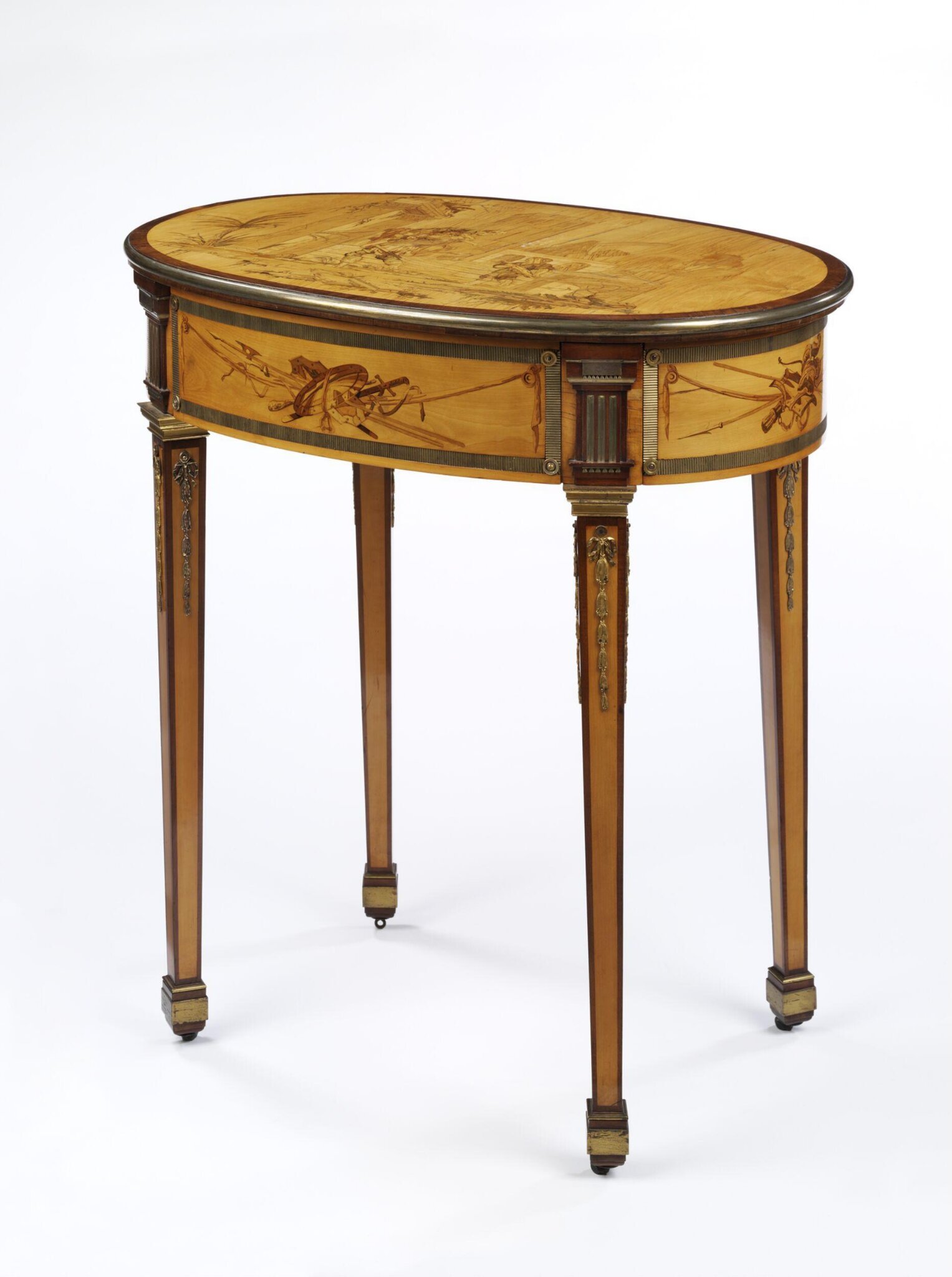
Writing table
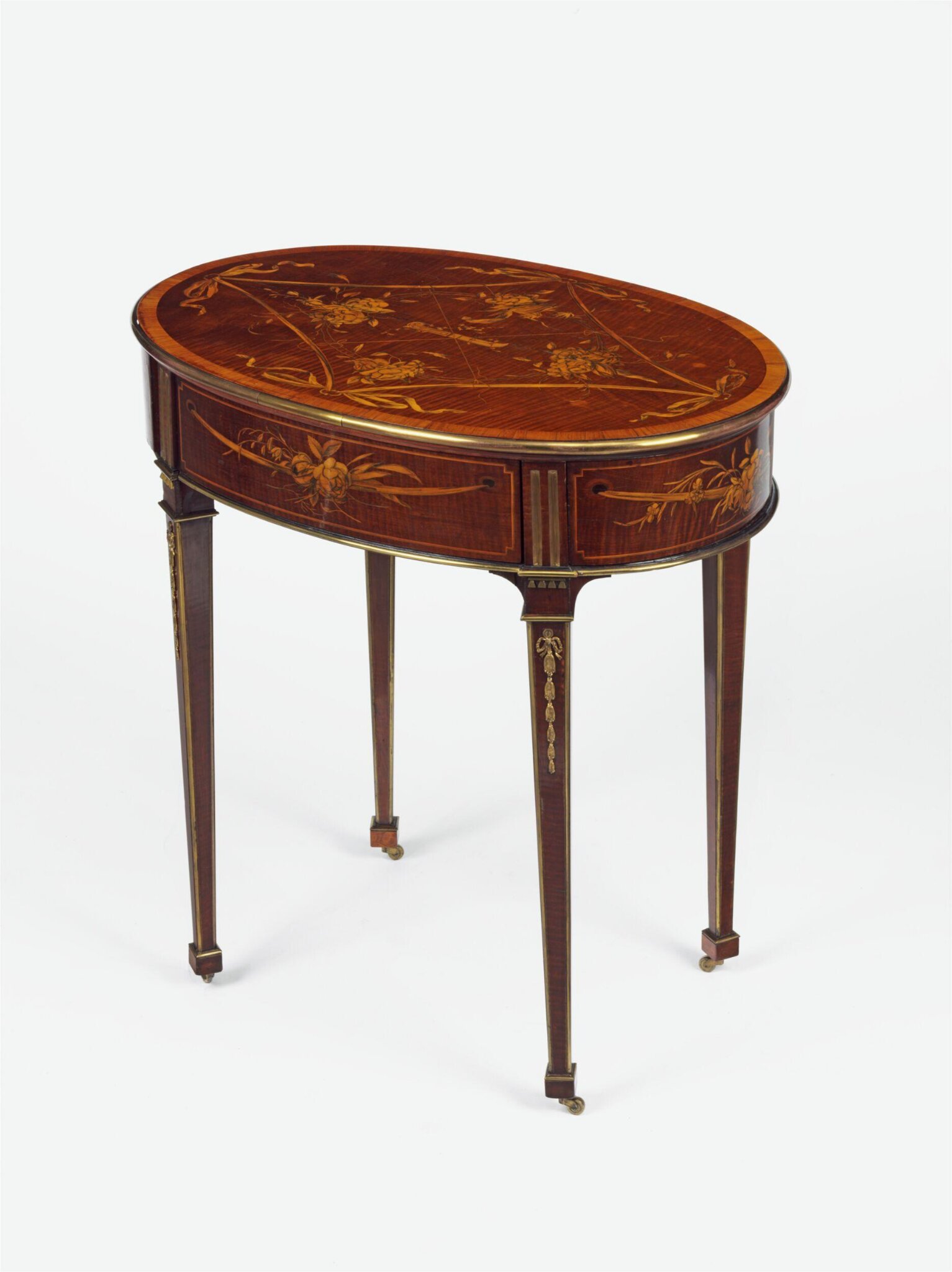
- Gallery: Europe 1600-1815, Room 1
- Maker: David Roentgen (made)
- Made in: Neuwied
- Date: ca. 1774-1780
- Object type: Writing table
- Style: Neo-classicism
- Dimensions: Height 780 mm; Width 730 mm; Depth 510 mm
- Museum: V&A South Kensington
- Collection record: V&A website
- Image © Victoria and Albert Museum, London.
Listen to the free audio guide
In the museum now? Point your phone at the next object and hear its guide.
About this object
Before you is a delicate, oval-topped writing table created in the workshops of David Roentgen in Germany, likely between 1774 and 1780. This piece reflects a shift in the late eighteenth century, as people began seeking smaller, lighter, and more private furniture for tasks like writing or needlework.
Take a close look at the surface. It features incredibly intricate marquetry, where tiny pieces of wood are used to create a mosaic effect. You can see colorful swags of ribbon tied in bows, as well as delicate flowers and even a small pruning knife. These designs use a technique called trompe l'oeil, making the ribbons appear as if they are threading in and out of the table.
The table is highly functional, too. If you were to pull the central drawer, a writing slope would slide out from within. There are also two hinged side compartments that spring open. Interestingly, the legs were originally designed to unscrew so the entire table could be taken apart for easier packing and transport.
See it in person
Writing table is on display in Europe 1600-1815, Room 1 at the V&A South Kensington on Cromwell Road, London — free to enter. Choose V&A South Kensington on audioguide.london and take a photo of it to hear this free audio guide in six languages — no app download needed.
New, in beta. V&A support has just launched and is still improving: 1,000 objects with audio so far, with more added all the time.