The Prodigal Son
- Gallery: Sculpture, Room 21, The Dorothy and Michael Hintze Galleries
- Maker: Auguste Rodin (maker)
- Made in: France
- Date: ca. 1885-1887
- Object type: Statue
- Materials: Bronze
- Dimensions: Height 138 cm; Weight 93 kg; Width 95 cm
- Museum: V&A South Kensington
- Collection record: V&A website
- Image © Victoria and Albert Museum, London.
Listen to the free audio guide
In the museum now? Point your phone at the next object and hear its guide.
About this object
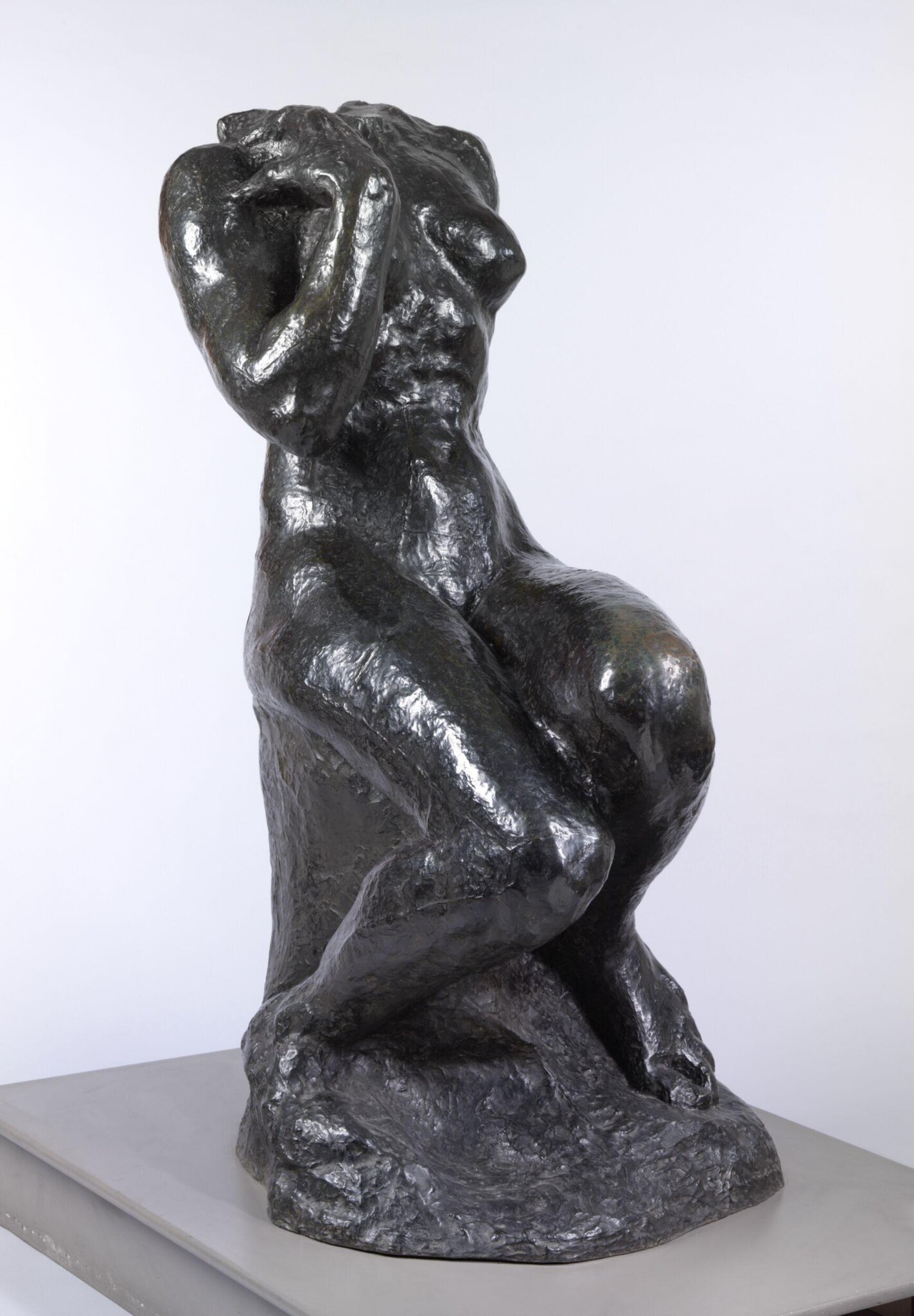
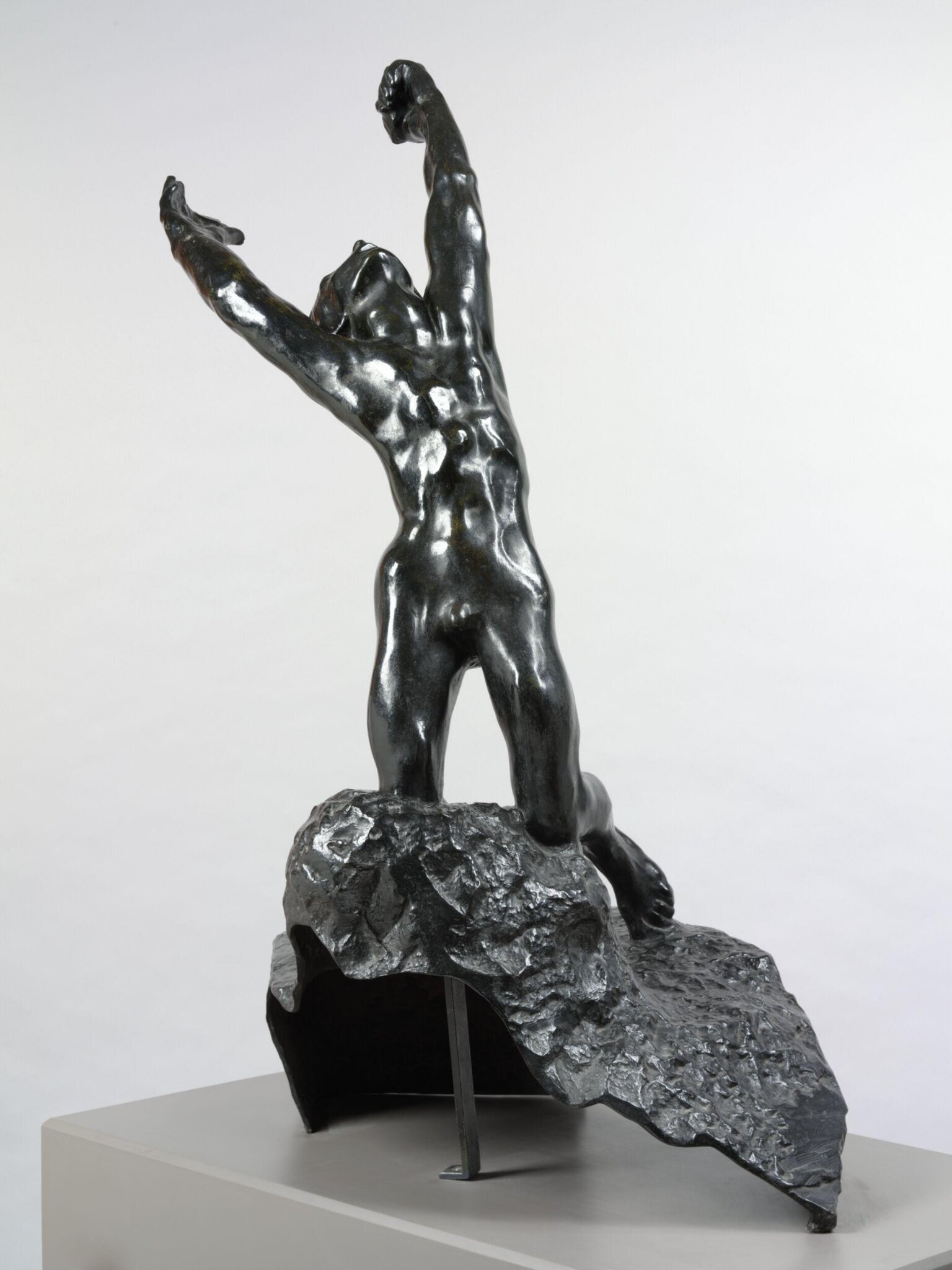
Before you is "The Prodigal Son," a bronze statue by the French sculptor Auguste Rodin, created around 1885 to 1887. This figure depicts a kneeling man with his arms raised high, appearing as if he is suspended in space.
As you look closely at the sculpture, notice the intense, dramatic expression in the body. Rodin purposefully exaggerated the muscles, stretching out the torso and prolonging the arms to convey a sense of deep distress. He once explained that he emphasized these protruding muscles and exaggerated tendons to express suffering and the fervor of prayer.
This figure has a long history of adaptation. It was originally conceived for a larger project called the Gates of Hell, where it appeared as part of a group. Rodin frequently reused his favorite compositions, changing their scale, pose, or title over time. While we know it today as "The Prodigal Son," inspired by the biblical parable of a son seeking forgiveness, it has also been referred to as "The Child of the Century" and "The Prayer of the Abandoned Child."
See it in person
The Prodigal Son is on display in Sculpture, Room 21, The Dorothy and Michael Hintze Galleries at the V&A South Kensington on Cromwell Road, London — free to enter. Choose V&A South Kensington on audioguide.london and take a photo of it to hear this free audio guide in six languages — no app download needed.
New, in beta. V&A support has just launched and is still improving: 1,000 objects with audio so far, with more added all the time.